
Basement Flooding · Metro Atlanta · Open 24 Hours
Basement Flooding Cleanup & Restoration in Metro Atlanta
Emergency pump‑out, drying and full restoration of flooded basements and crawl spaces — from Norcross across Gwinnett, DeKalb, Fulton and Cobb counties, 24 hours a day.
Flooded Basement? We Pump It Out, Dry It Down and Put It Back — 24 Hours a Day
Emergency basement flood cleanup, structural drying and full restoration for homes and businesses across Metro Atlanta
Verus Restoration provides emergency basement flooding cleanup and restoration throughout Metro Atlanta and Northeast Georgia. From our base in Norcross we respond 24 hours a day to flooded basements and crawl spaces — pumping out standing water, removing what can’t be saved, drying the structure to verified moisture levels, and rebuilding finished space so your lower level is usable again, not just dry.
- Availability
- Open 24 hours, 7 days a week
- Service
- Pump-out, drying, cleanup & rebuild
- Properties
- Finished & unfinished basements, crawl spaces
- Area
- Norcross, GA · Metro Atlanta
A flooded basement is a race against the clock. Water wicks up drywall, soaks carpet pad and subfloor, and within a day or two creates the conditions for mold. The faster extraction and drying start, the more of your basement survives. Call or text (404) 983-0966 as soon as you find water.
Common Causes of Basement Flooding in Metro Atlanta
North Atlanta’s hills, dense clay soil and heavy summer and fall storms push a lot of water toward basements. The source matters — it decides how the water is categorized, what can be salvaged and what has to go — so finding it is the first thing we do.
- Heavy rain and storm runoff overwhelming grading, gutters and downspouts
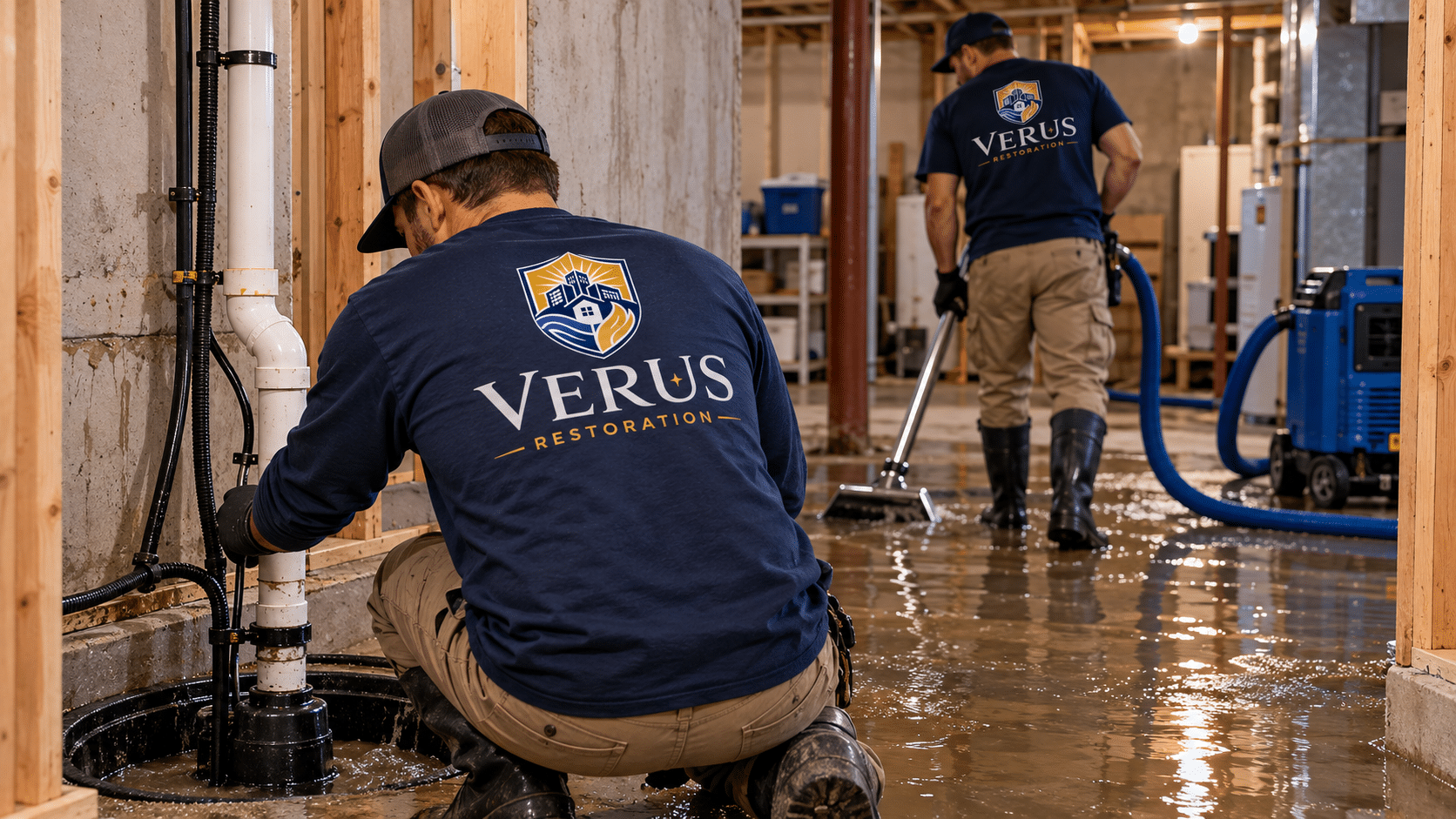
- Sump pump failure — power loss, a stuck float or a pump that simply wore out
- Hydrostatic pressure pushing groundwater through foundation cracks and cove joints
- Burst or leaking pipes, water heaters and washing-machine supply lines
- Sewer or drain backups after heavy rain or a blocked main line
- Window wells and egress windows that fill and leak during storms
- HVAC condensate and water-heater pan overflows that go unnoticed
- Poor exterior drainage — downspouts discharging at the foundation, negative grading
Clean water from a supply line is handled very differently from groundwater or a sewer backup. We identify the category on arrival so the right materials are saved, the right ones are removed, and nothing contaminated is dried in place.
What to Do While You Wait for Us
Safety first. Do not enter standing water if it could be in contact with outlets, extension cords, a furnace, a water heater or the electrical panel. If the panel is in the basement and you can’t reach it safely, leave the power on and stay out — we’ll handle it. If the water is from a sewer backup, keep people and pets away from it entirely.
- Stop the source if it’s plumbing — shut off the main water valve
- Photograph and video the water level and damage before anything is moved
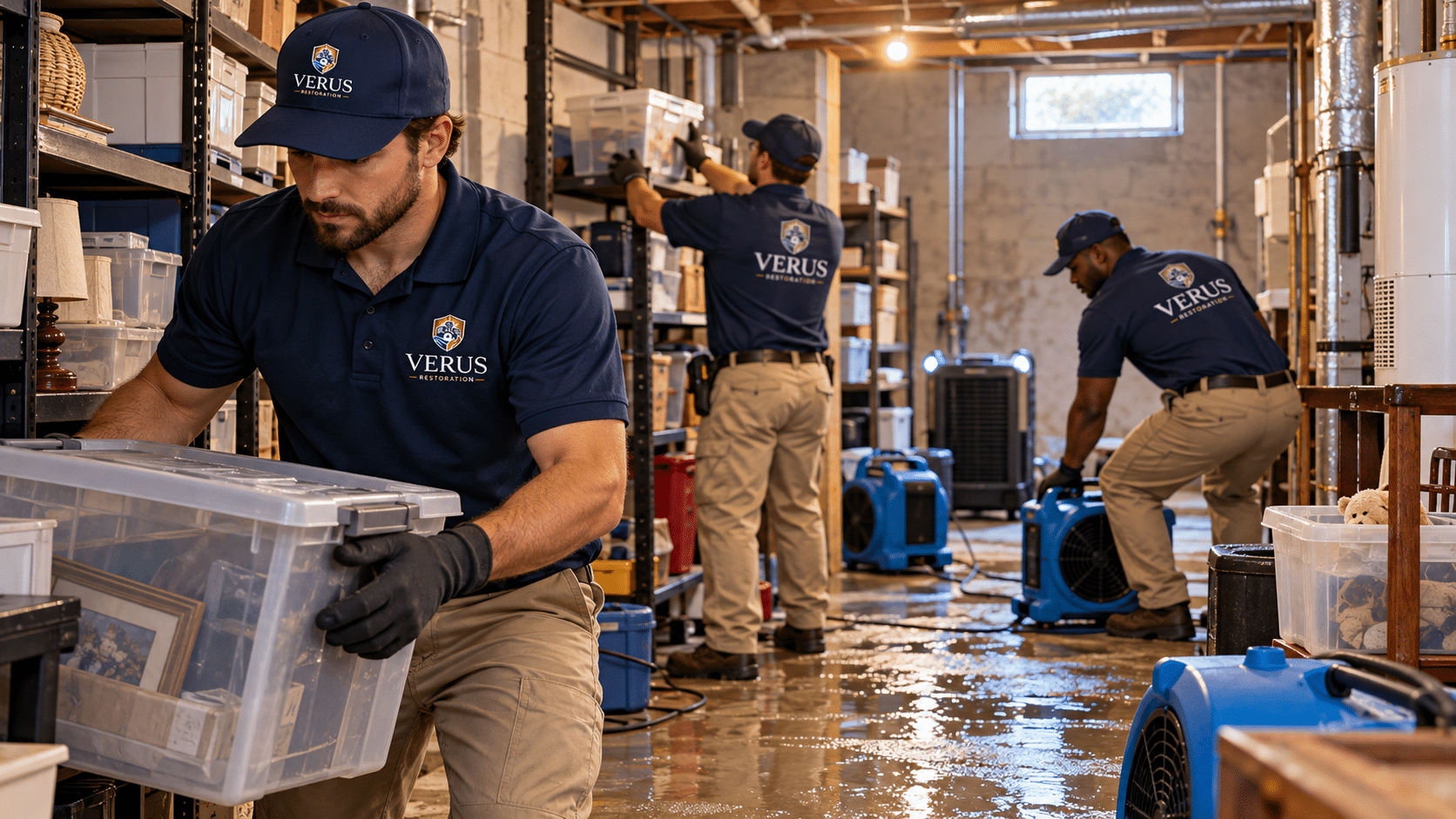
- Move what you can — documents, electronics, furniture — to a dry floor
- Don’t run the HVAC if the air handler or ducts are in the basement
- Leave wet carpet and drywall for us; pulling it wrong spreads contamination
- Call (404) 983-0966 — we’ll walk you through anything else on the phone
Our Basement Flood Cleanup & Restoration Process
-
Emergency response & assessment
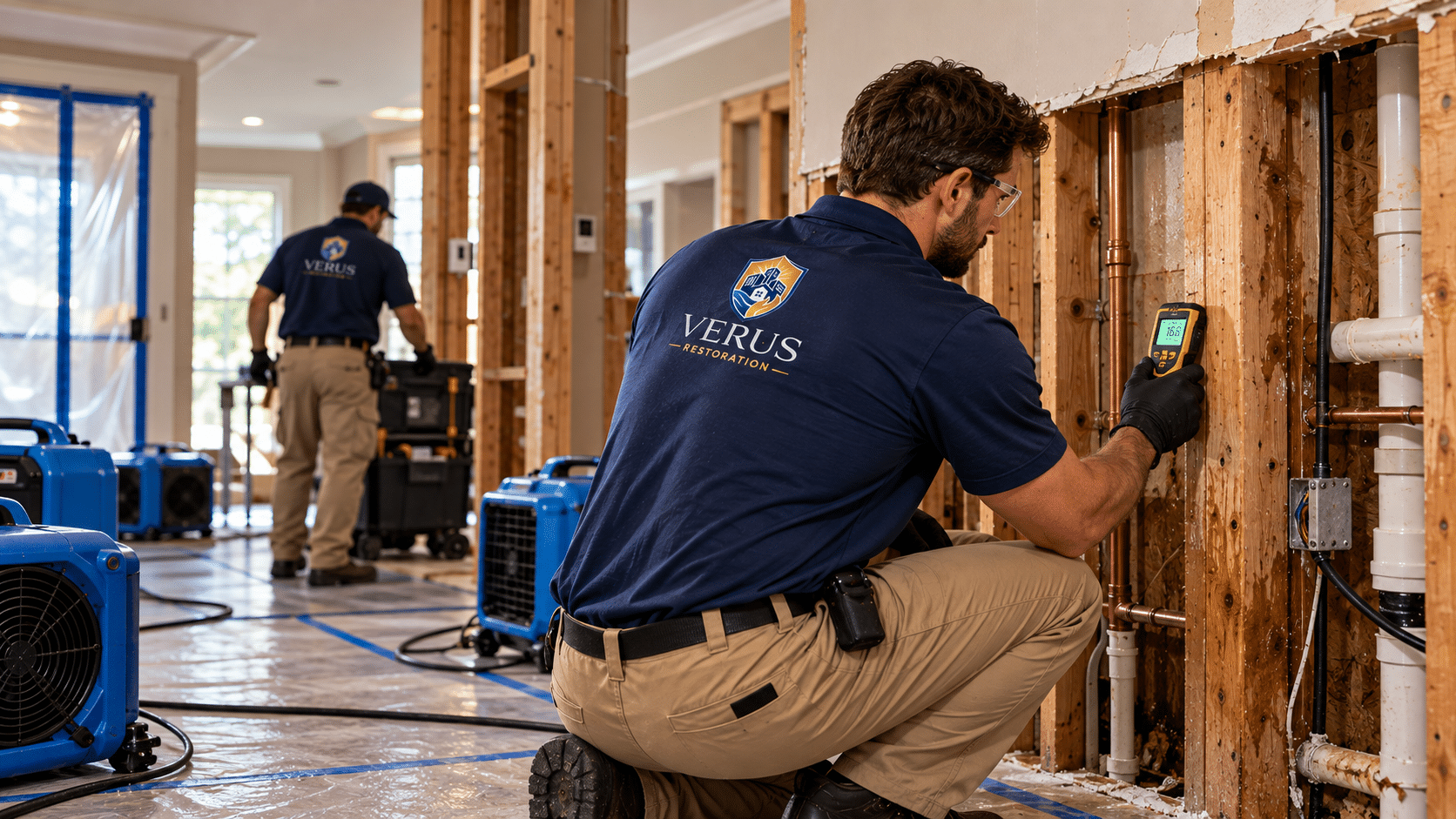
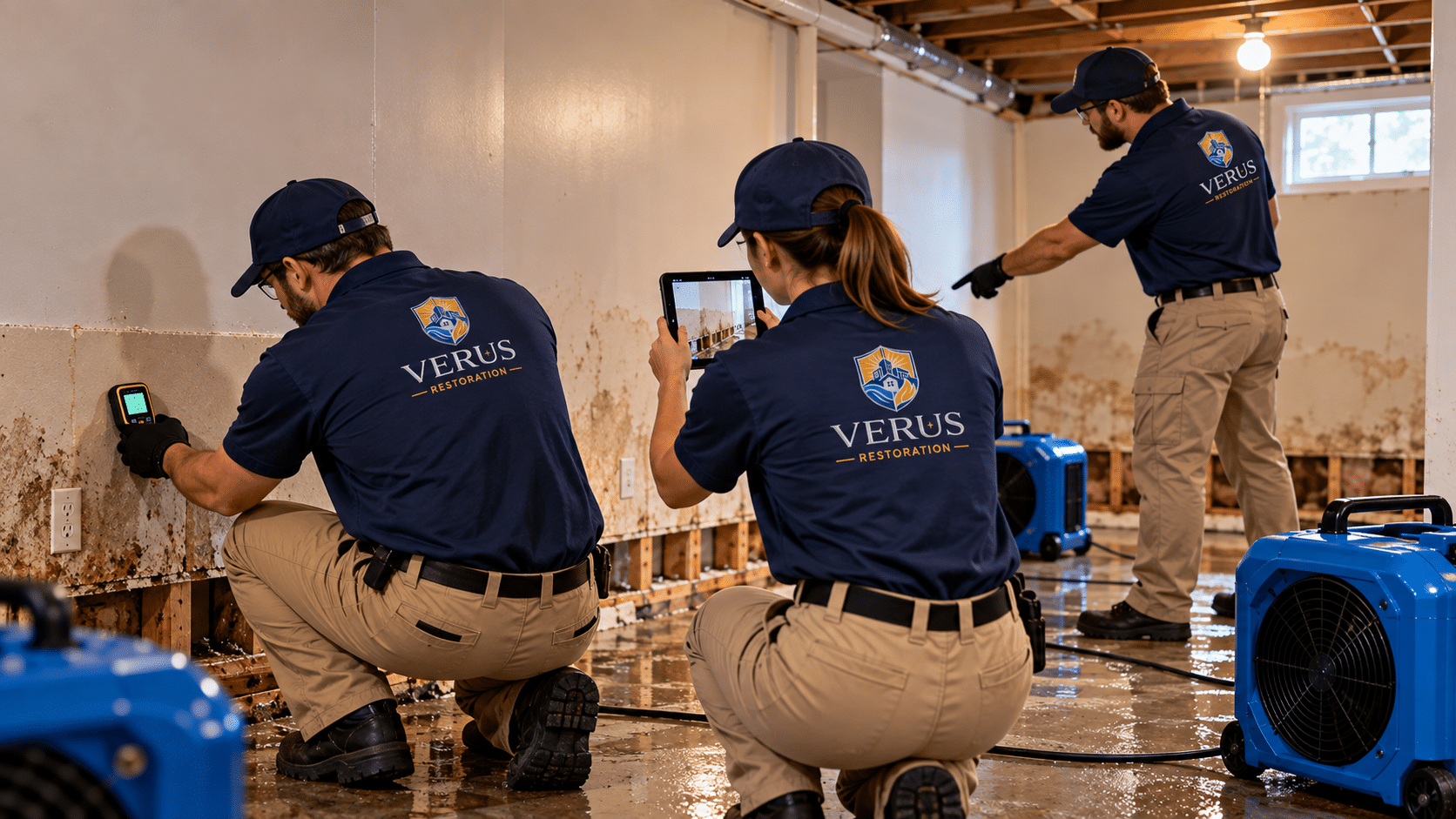
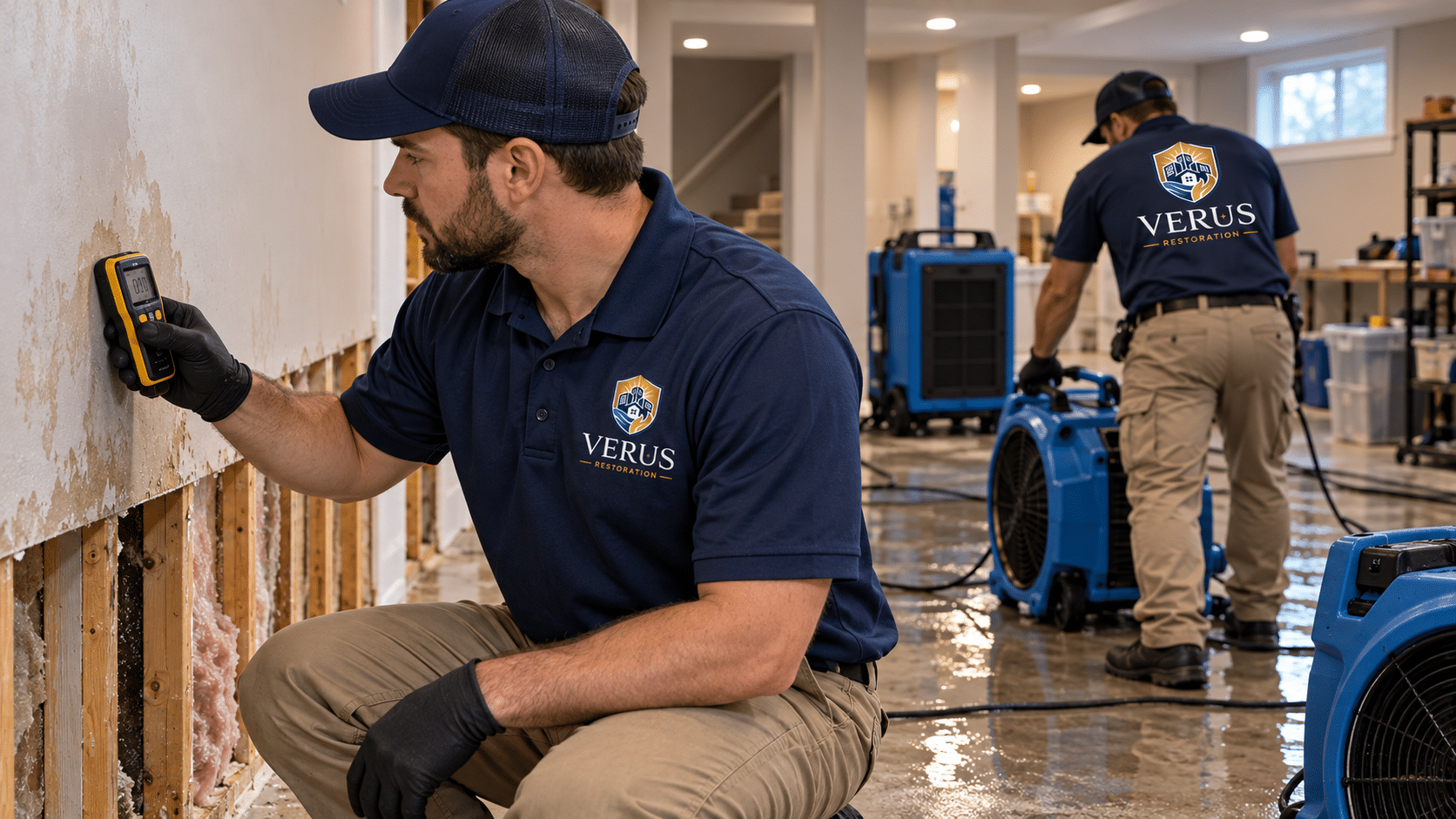
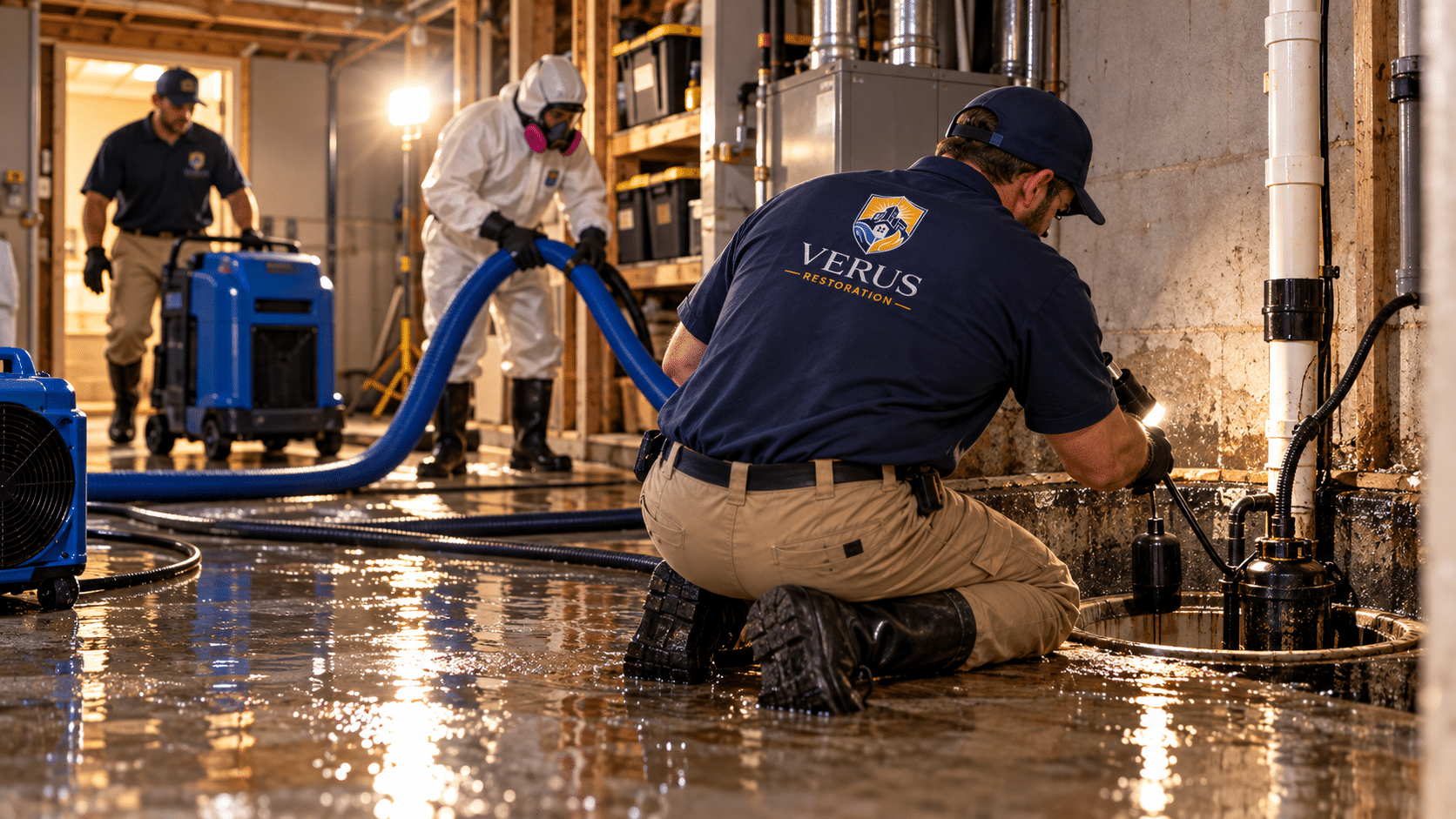
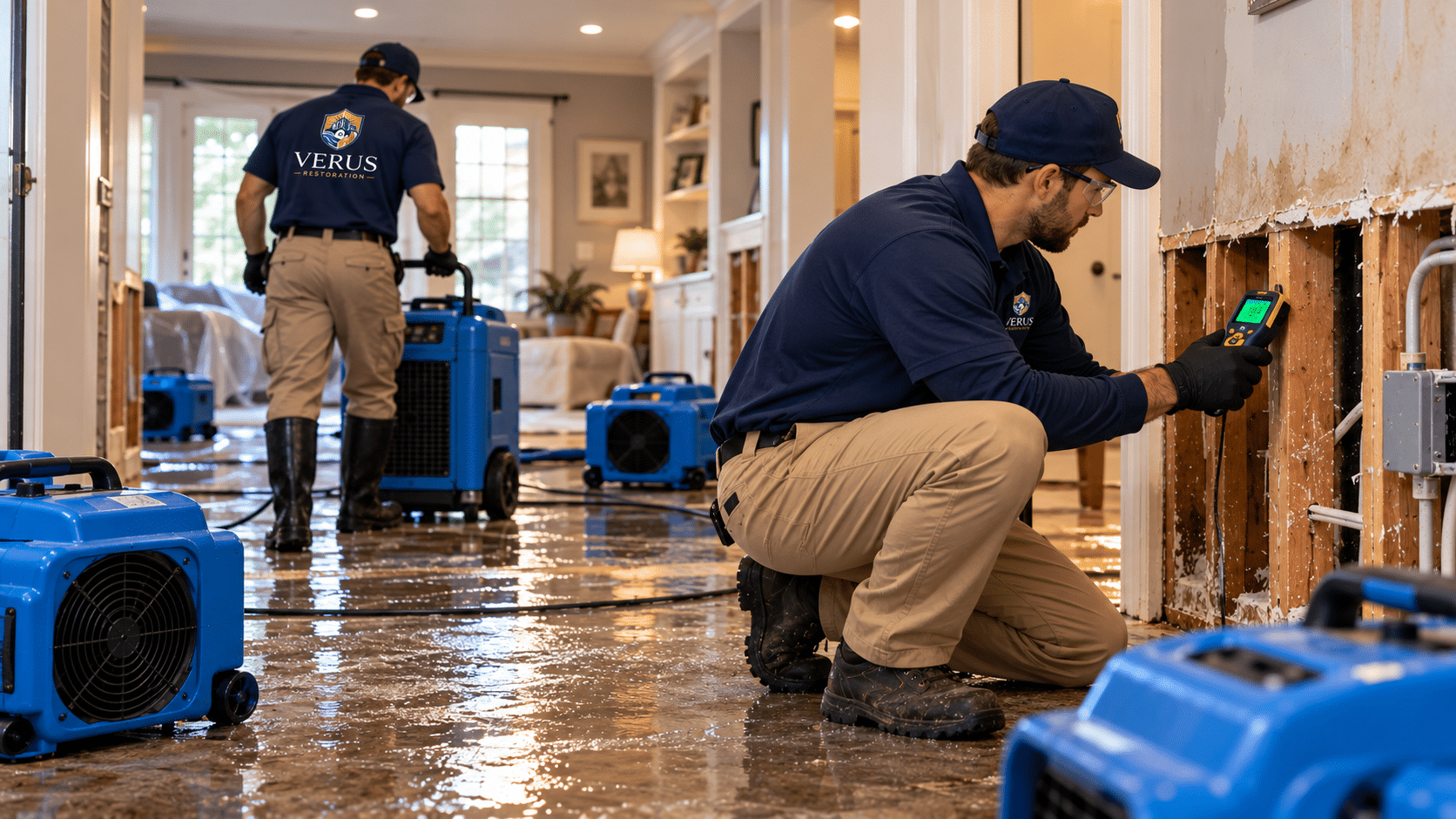
We arrive, make the space safe, find and stop the source, identify the water category, and map how far moisture has travelled into walls, floors and framing with meters and thermal imaging.
-
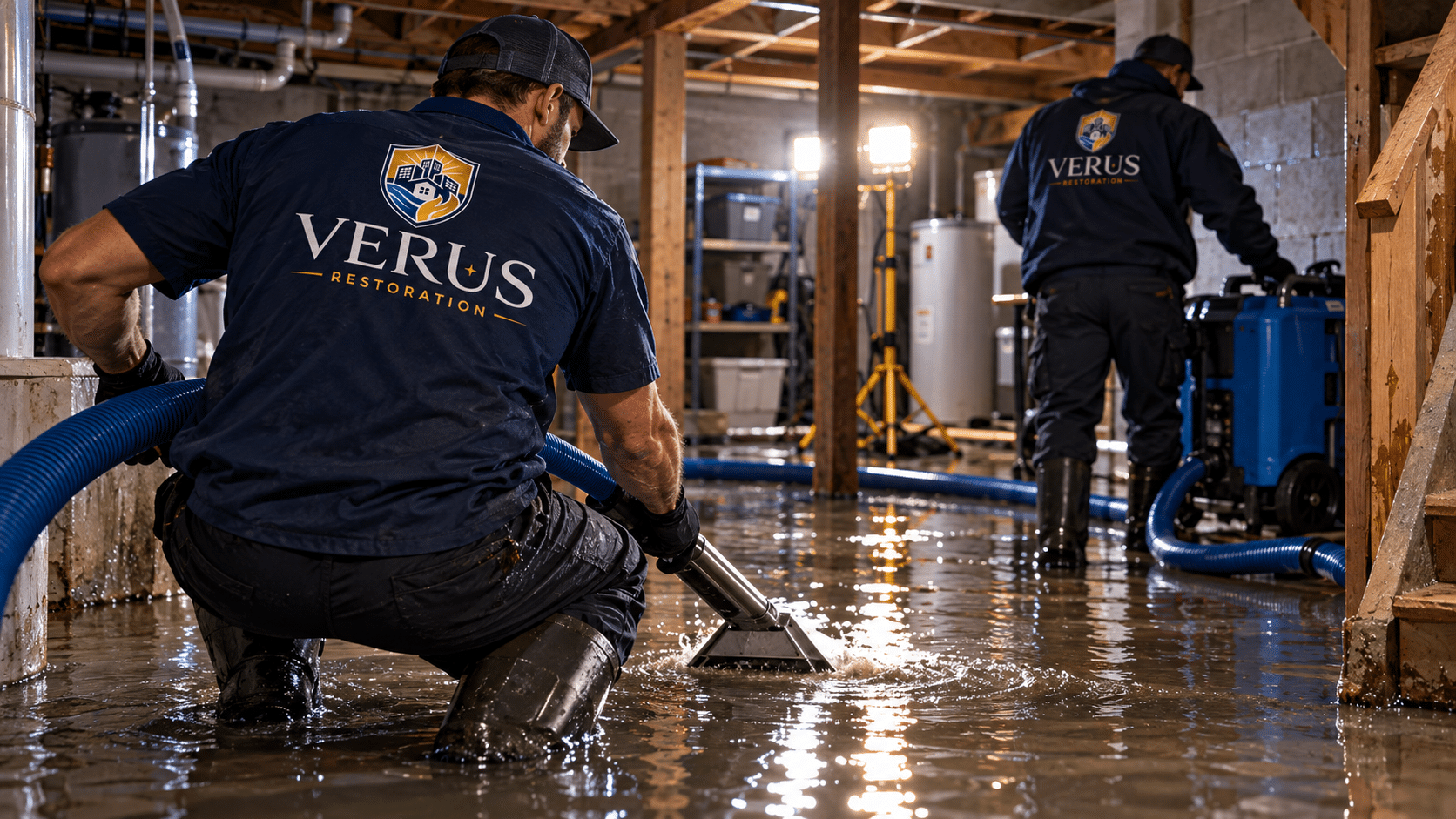
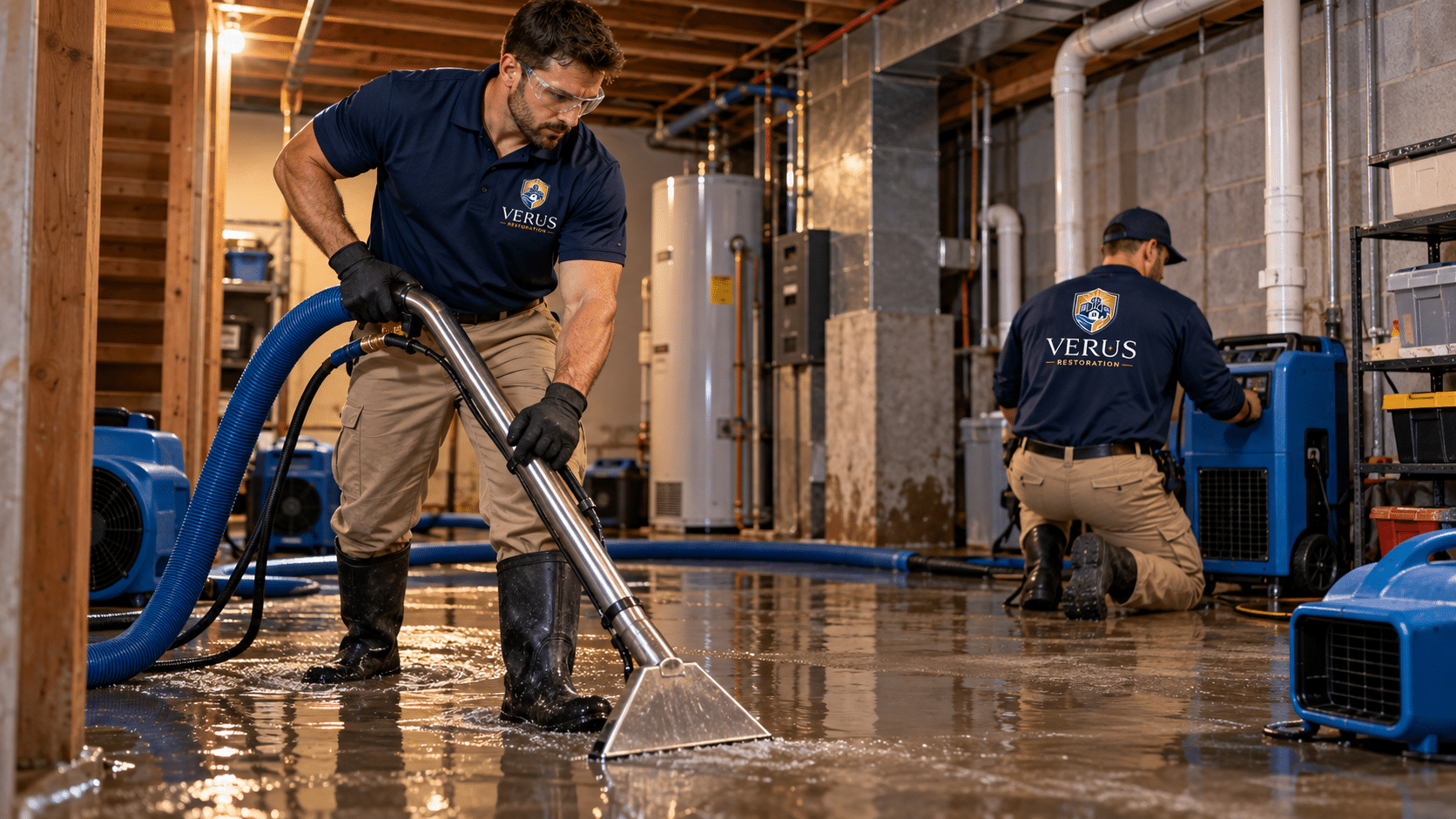
Pump-out & extraction
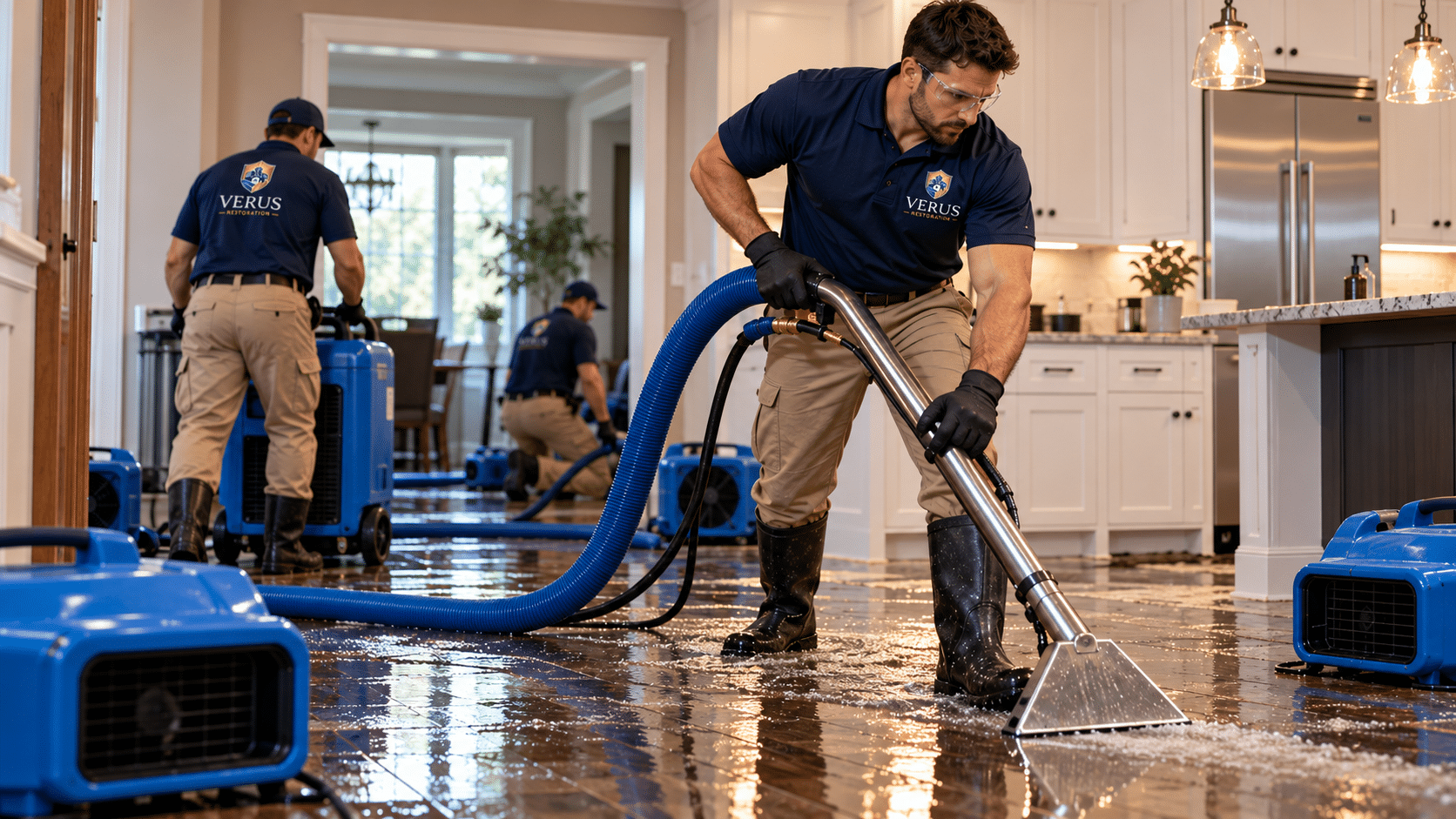
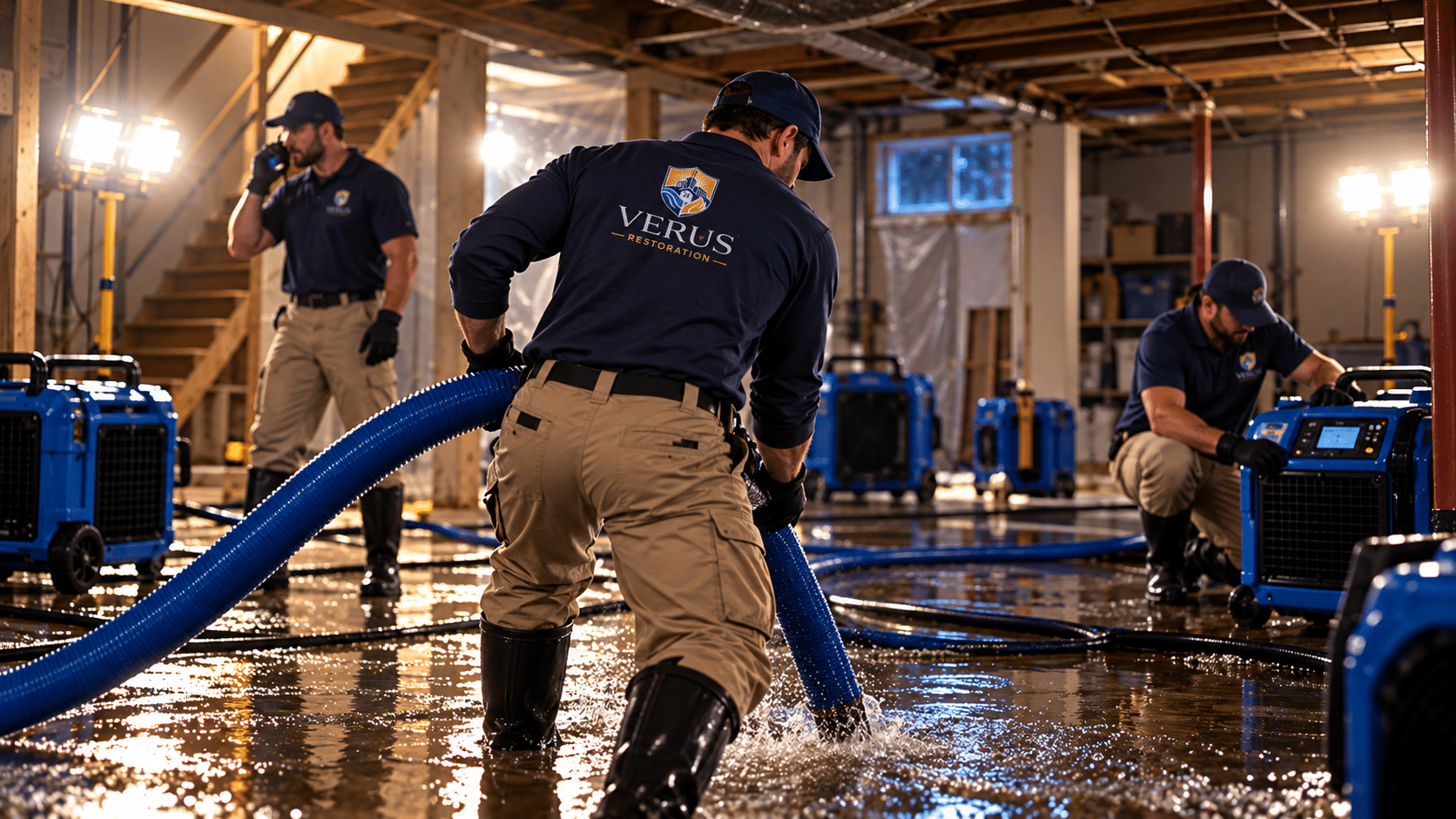
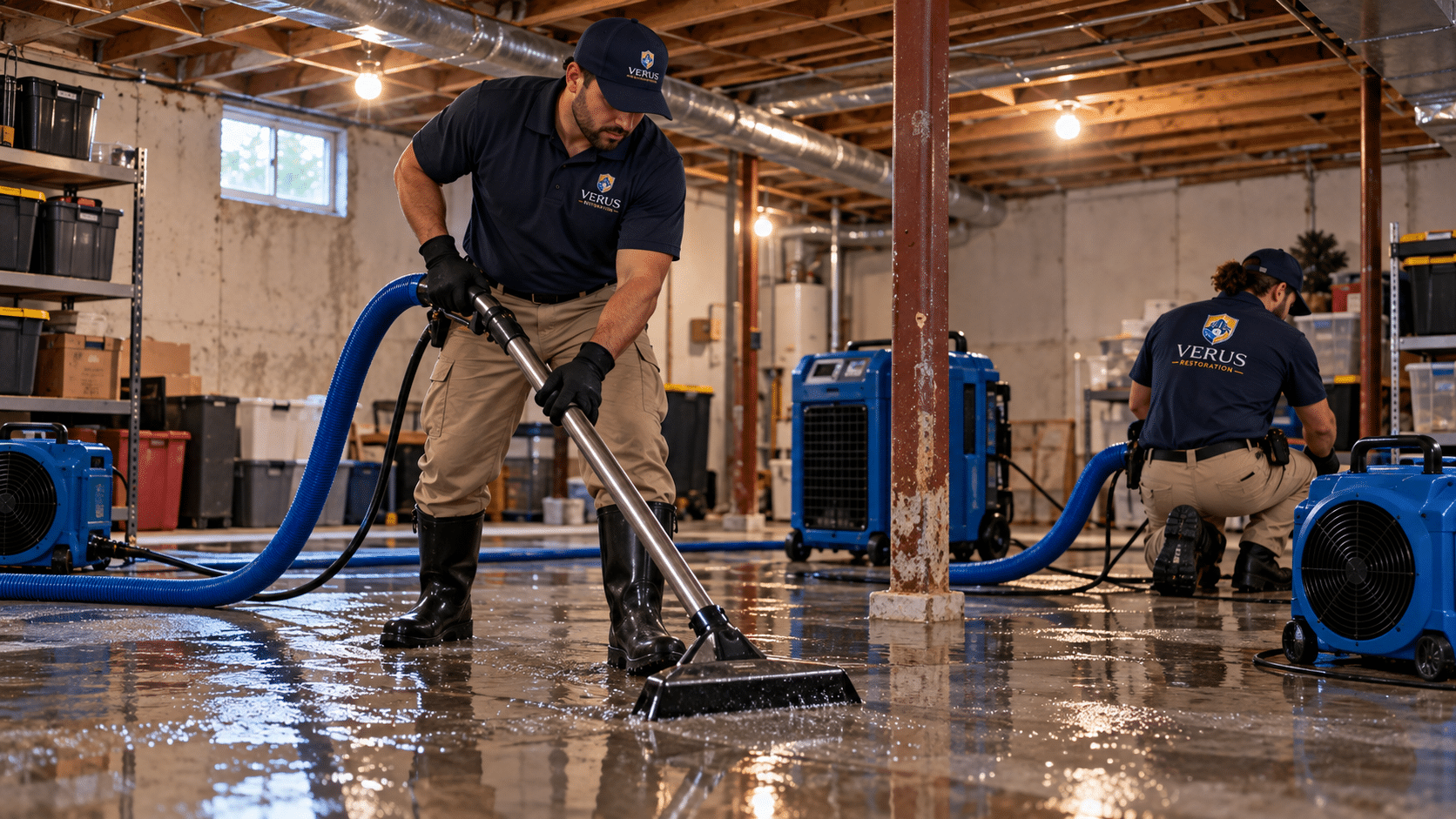
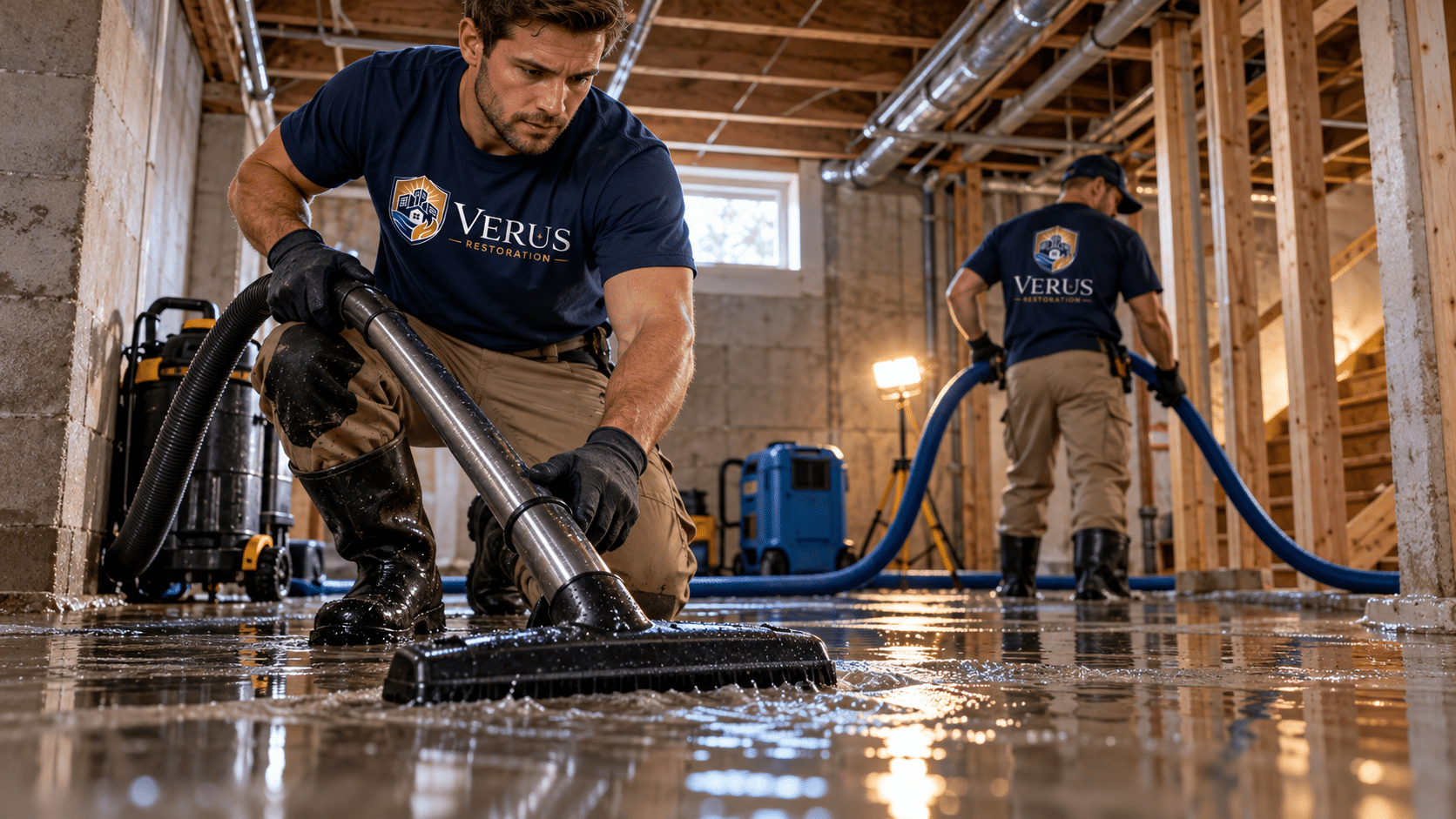
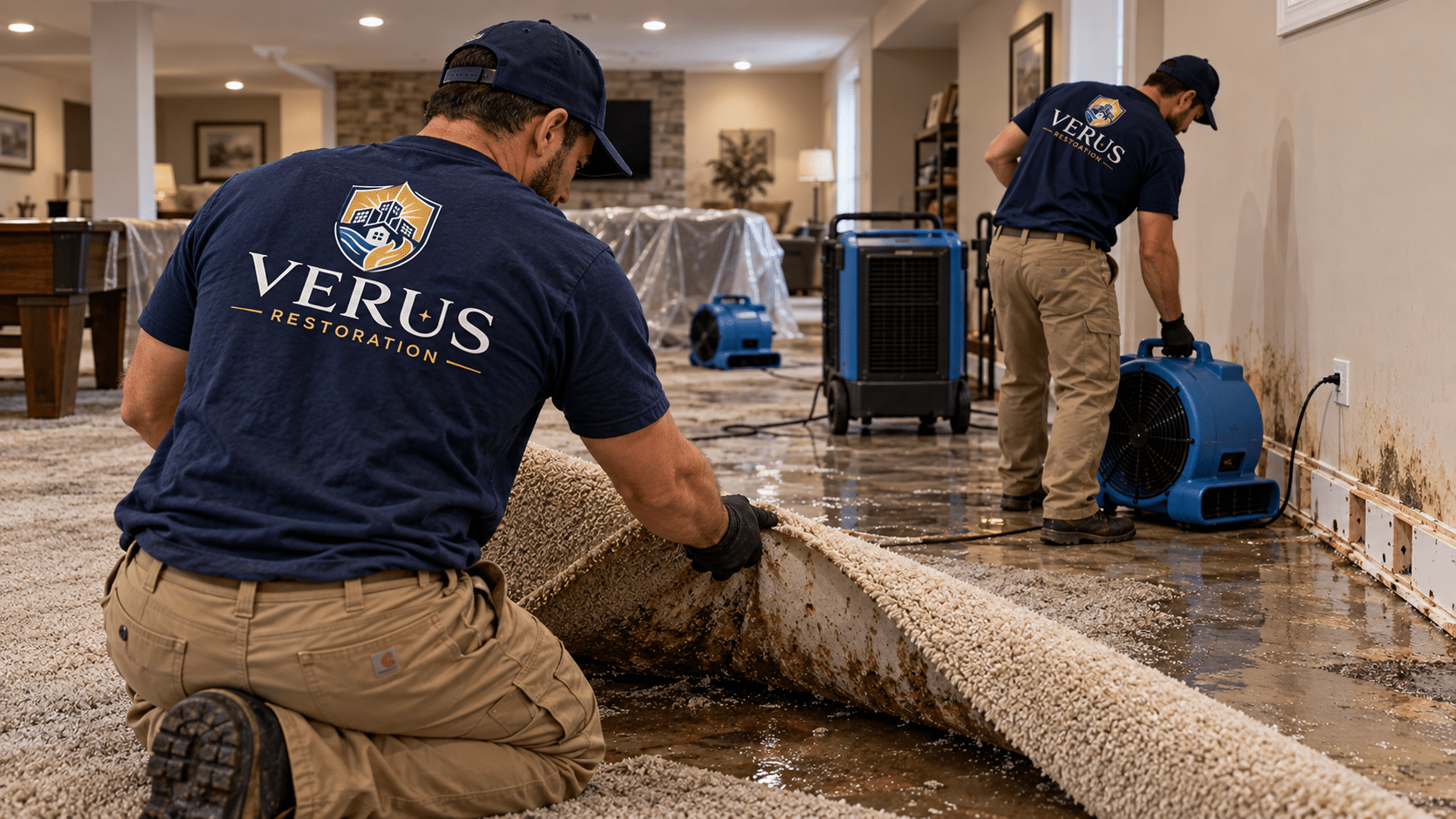
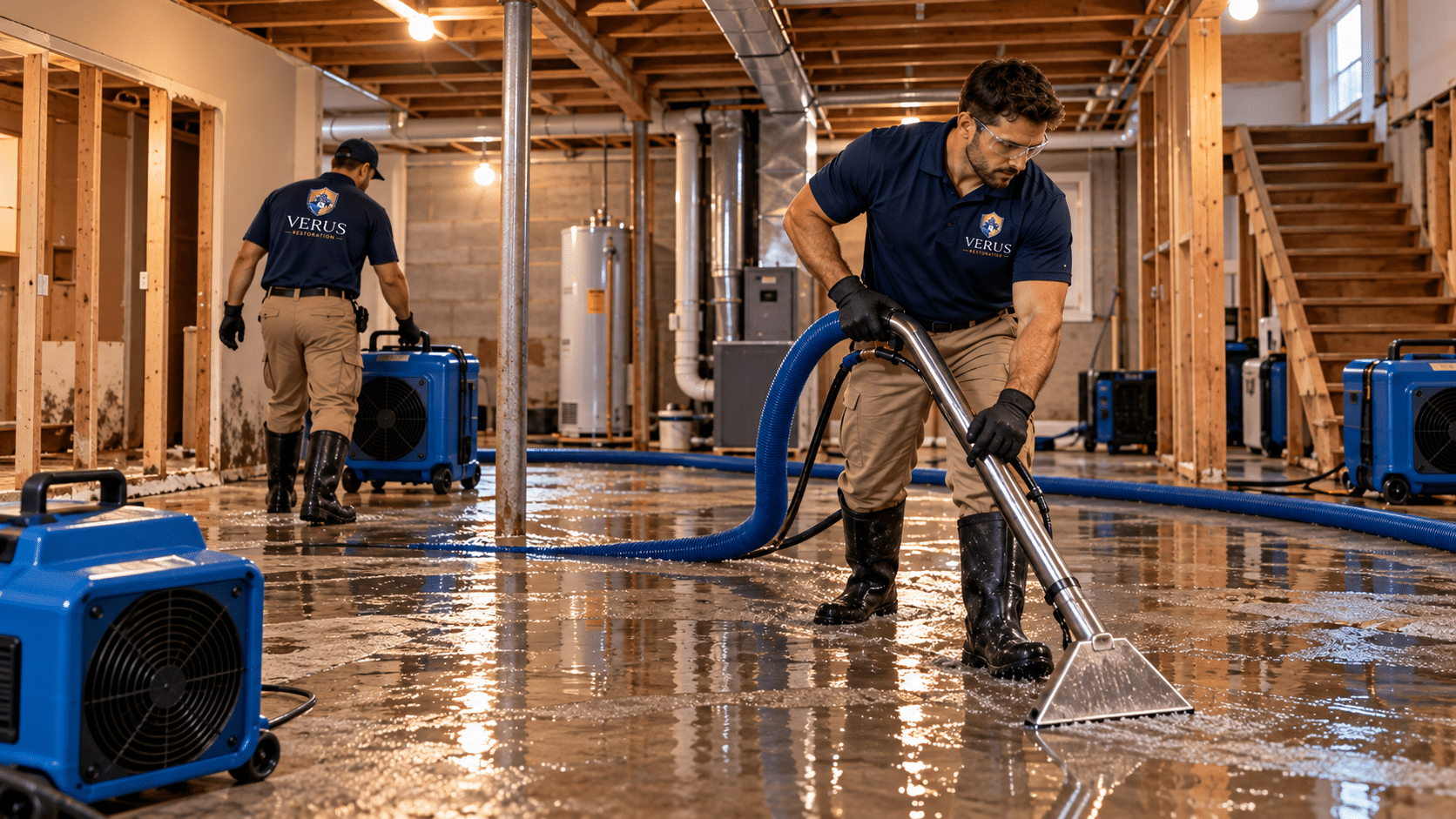
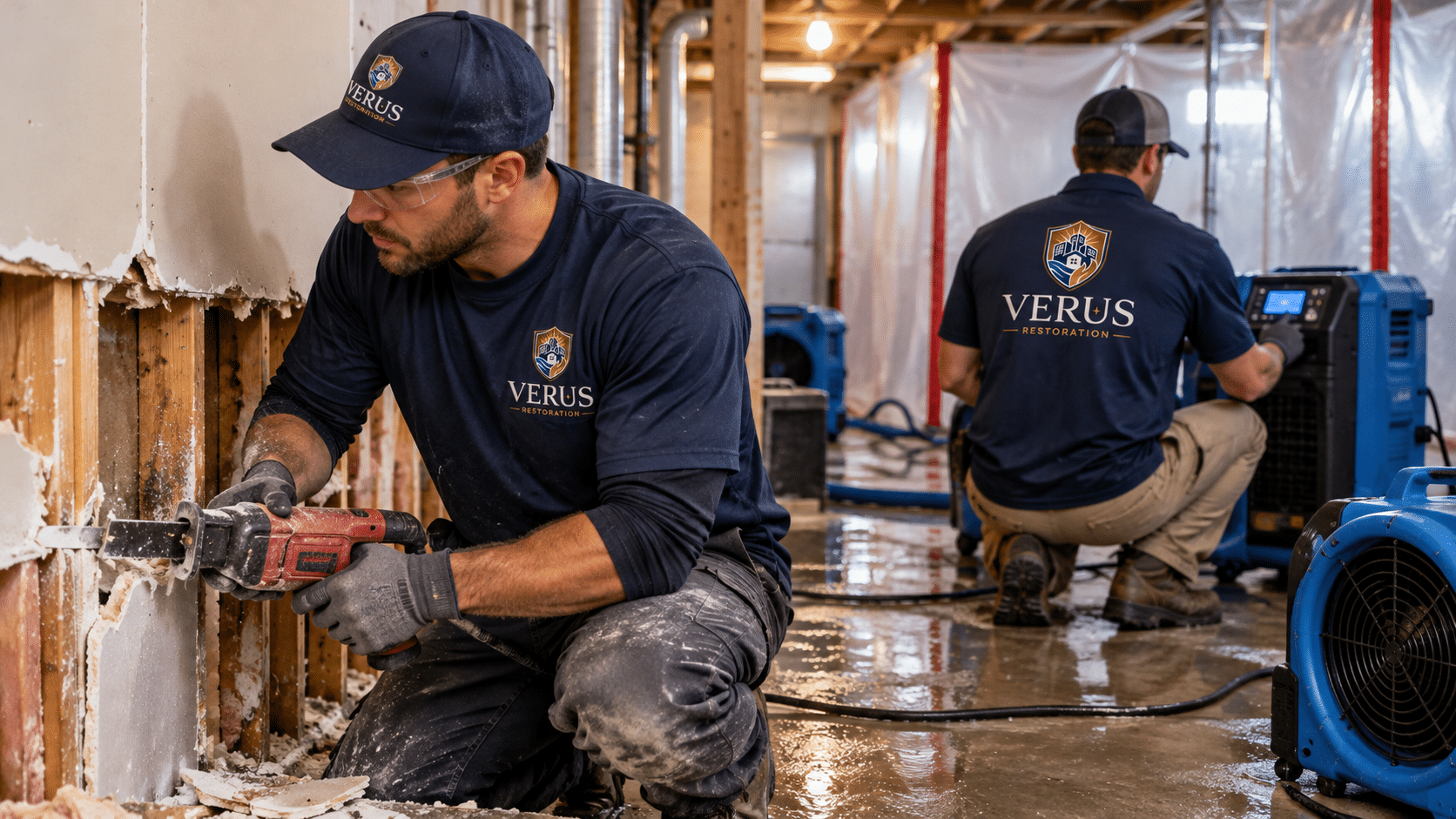
Submersible pumps clear standing water; truck-mounted and portable extractors pull the rest out of carpet, pad and hard floors. The goal is to get bulk water out within hours, not days.
-
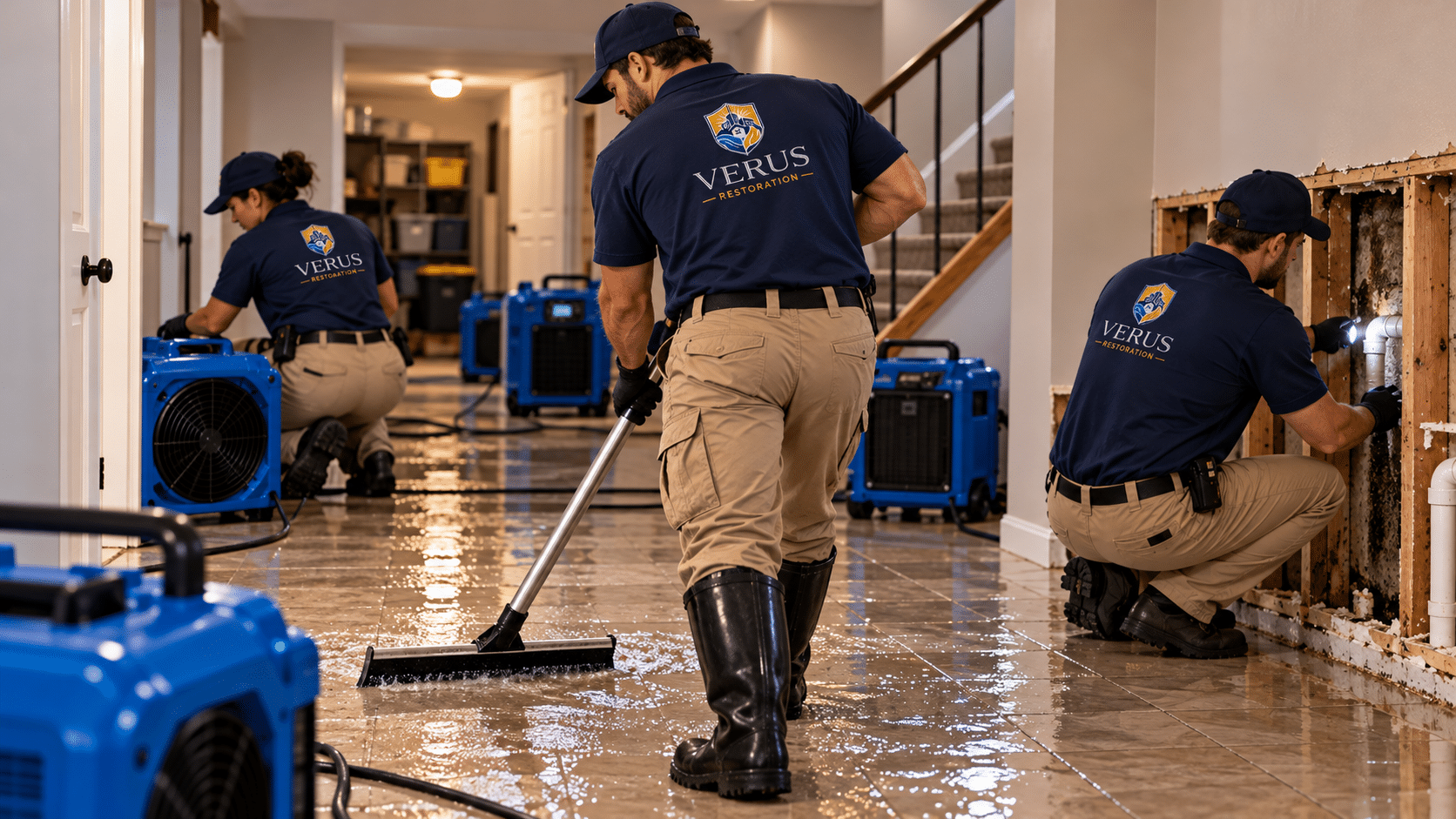
Removal, cleaning & treatment
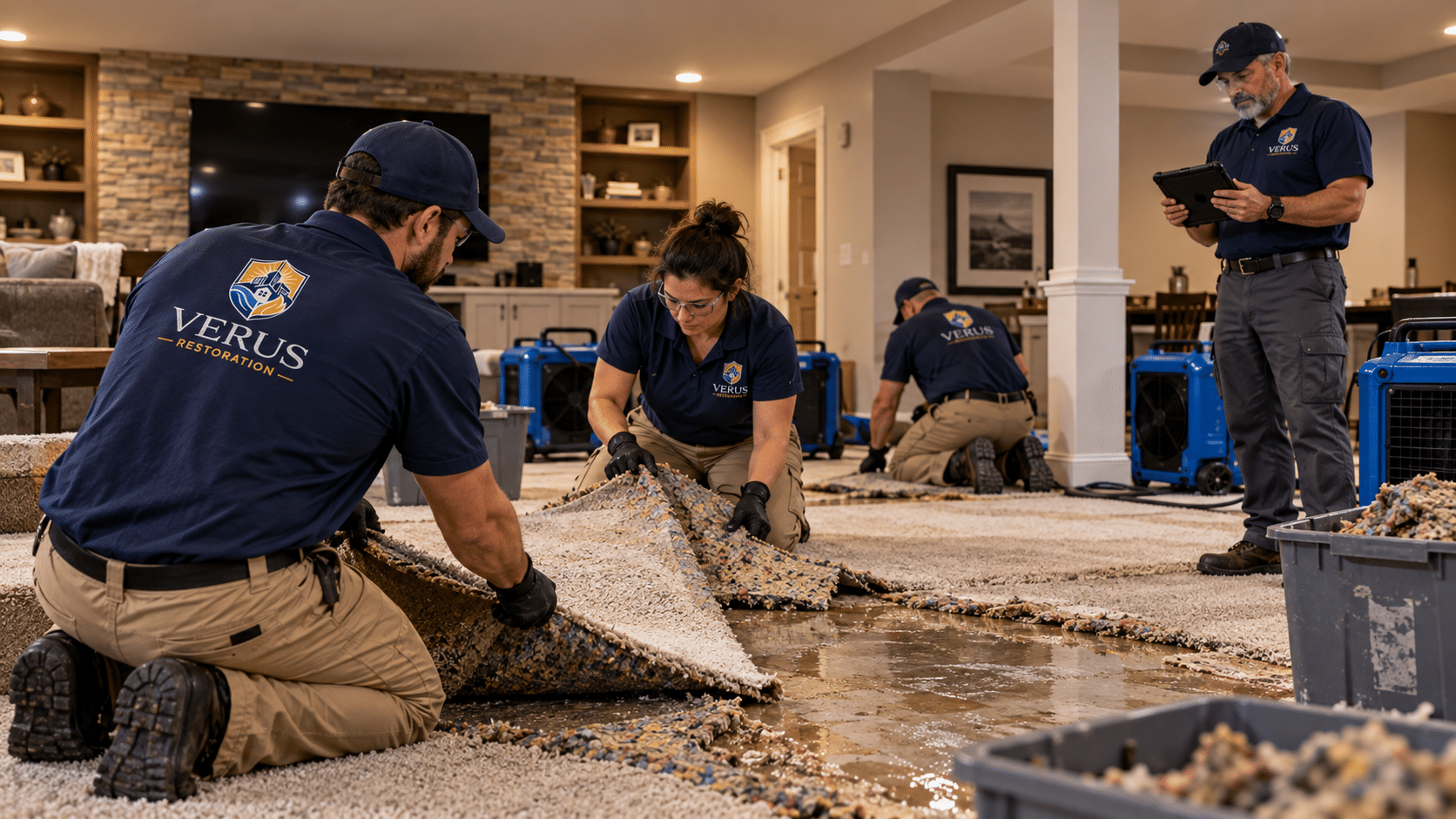
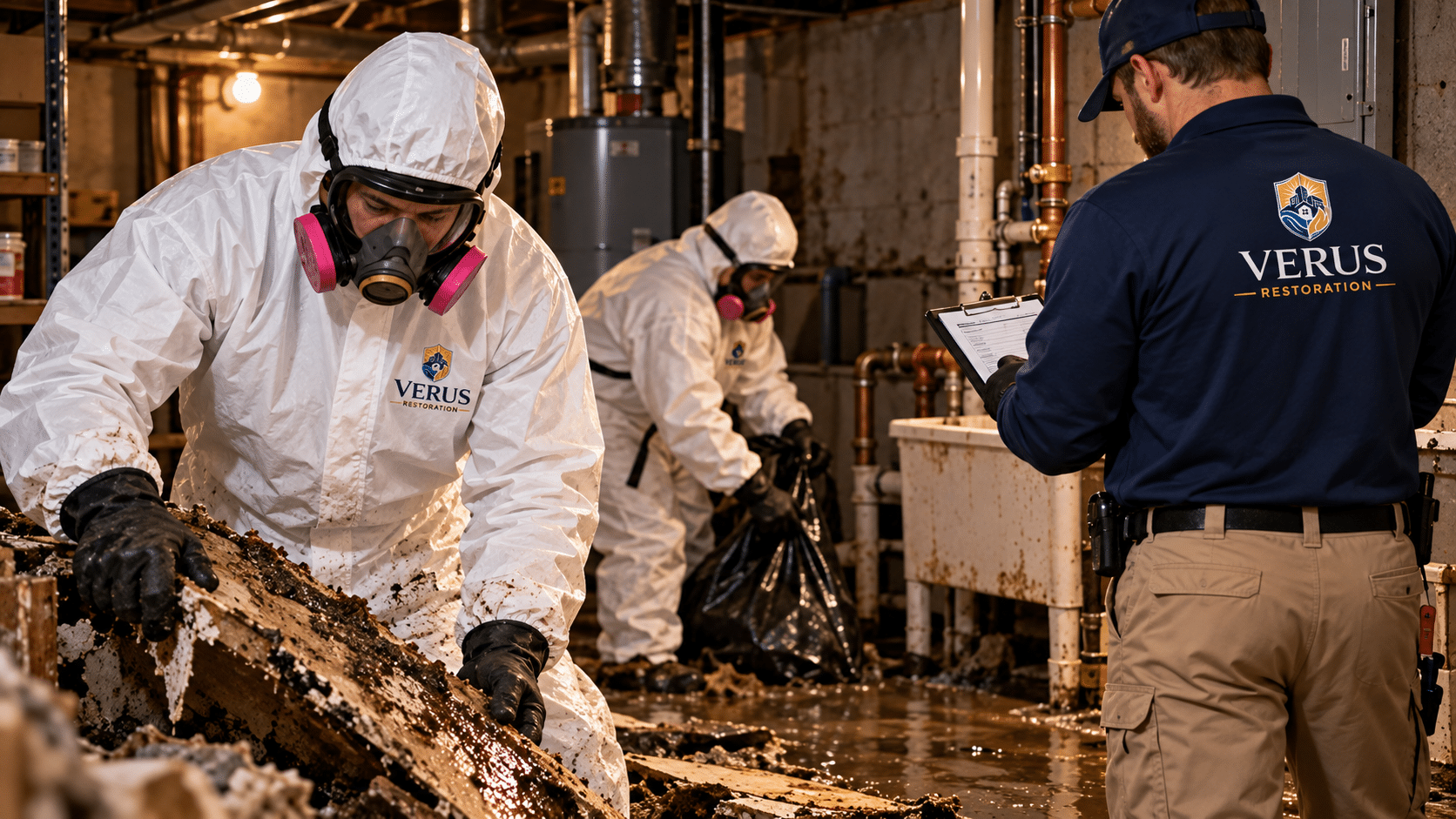
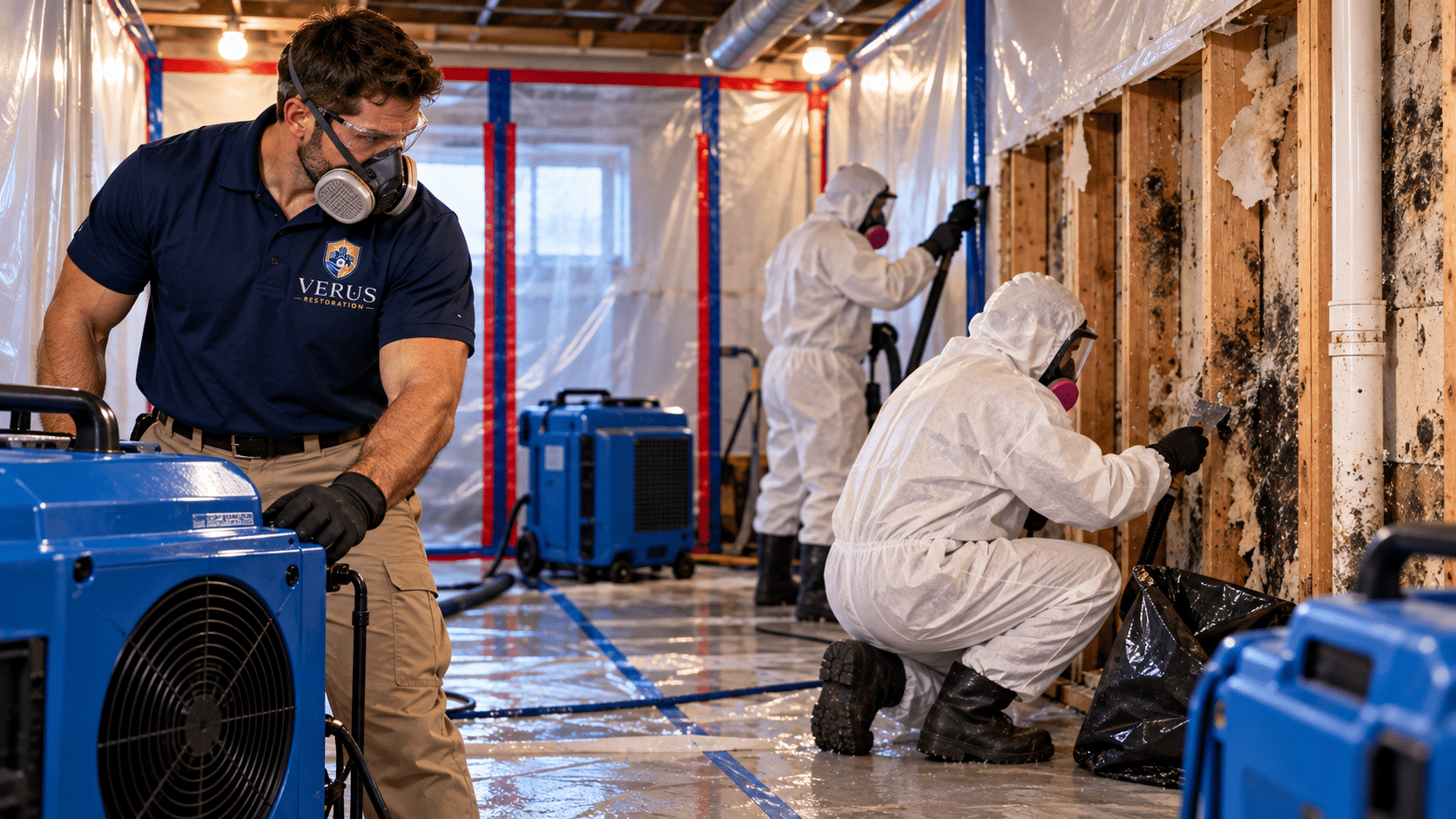
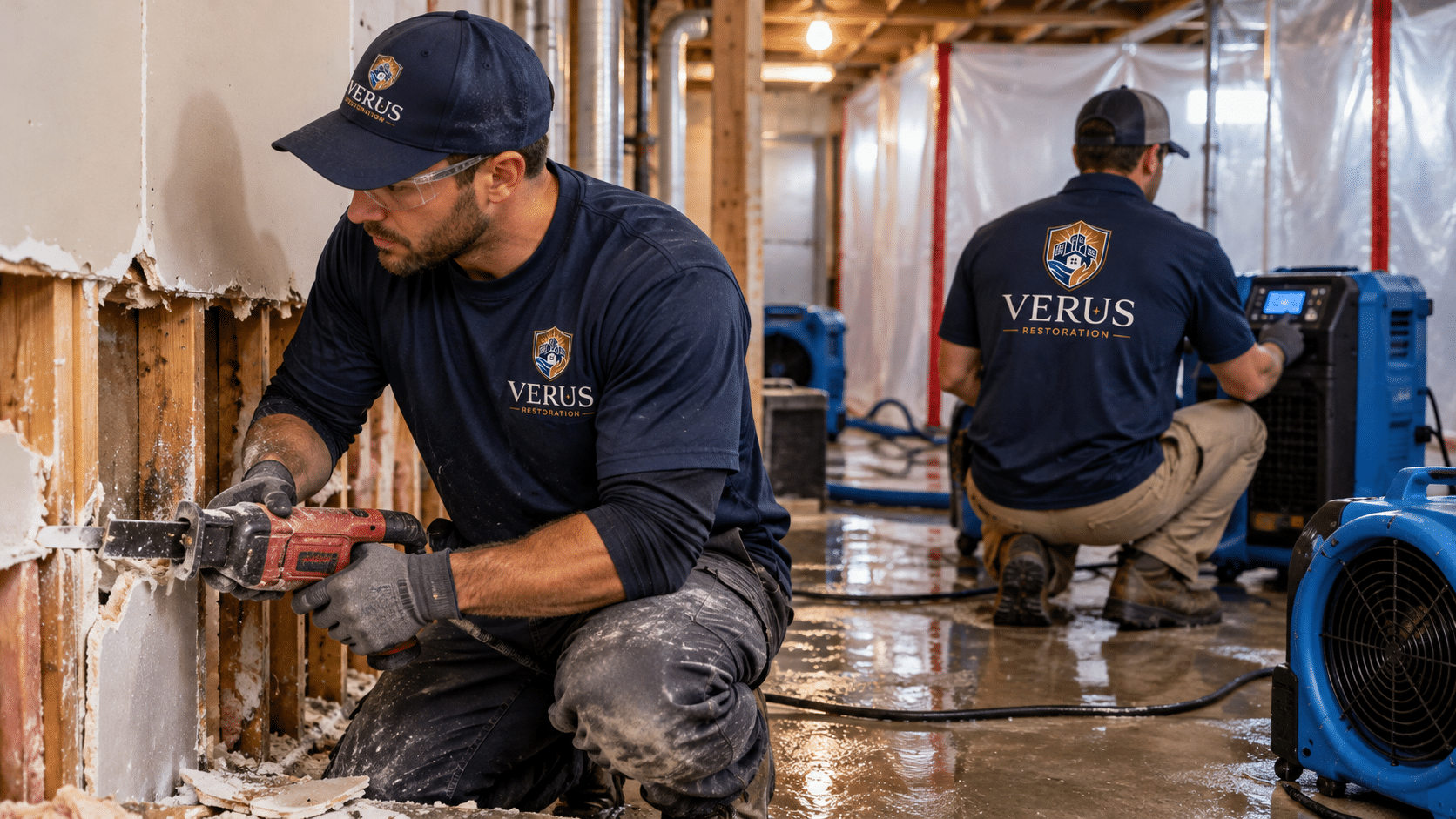
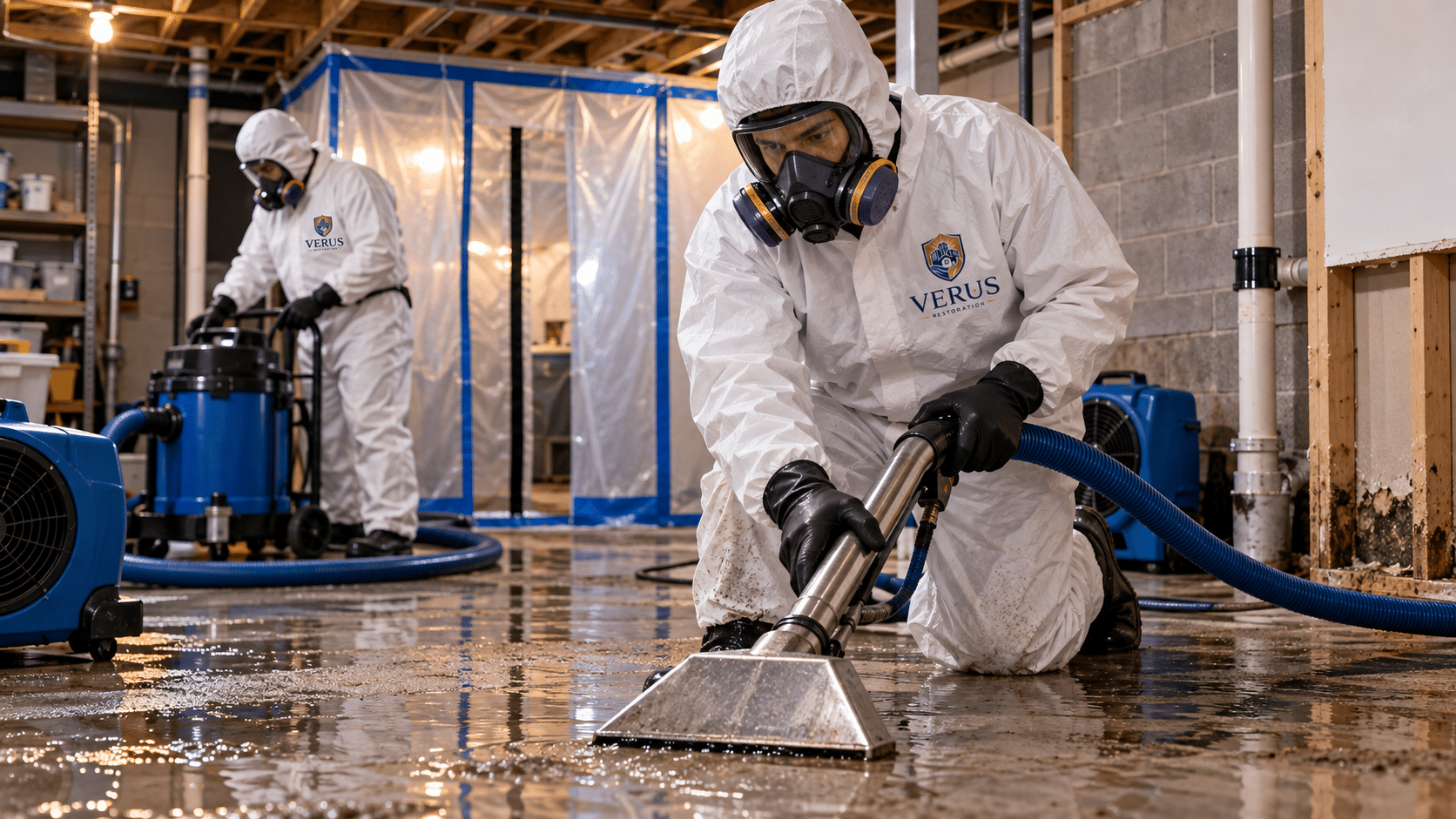
Saturated drywall, insulation, carpet pad and damaged contents are removed and documented. Every surface that got wet is cleaned and treated with antimicrobials to stop mold before it starts.
-
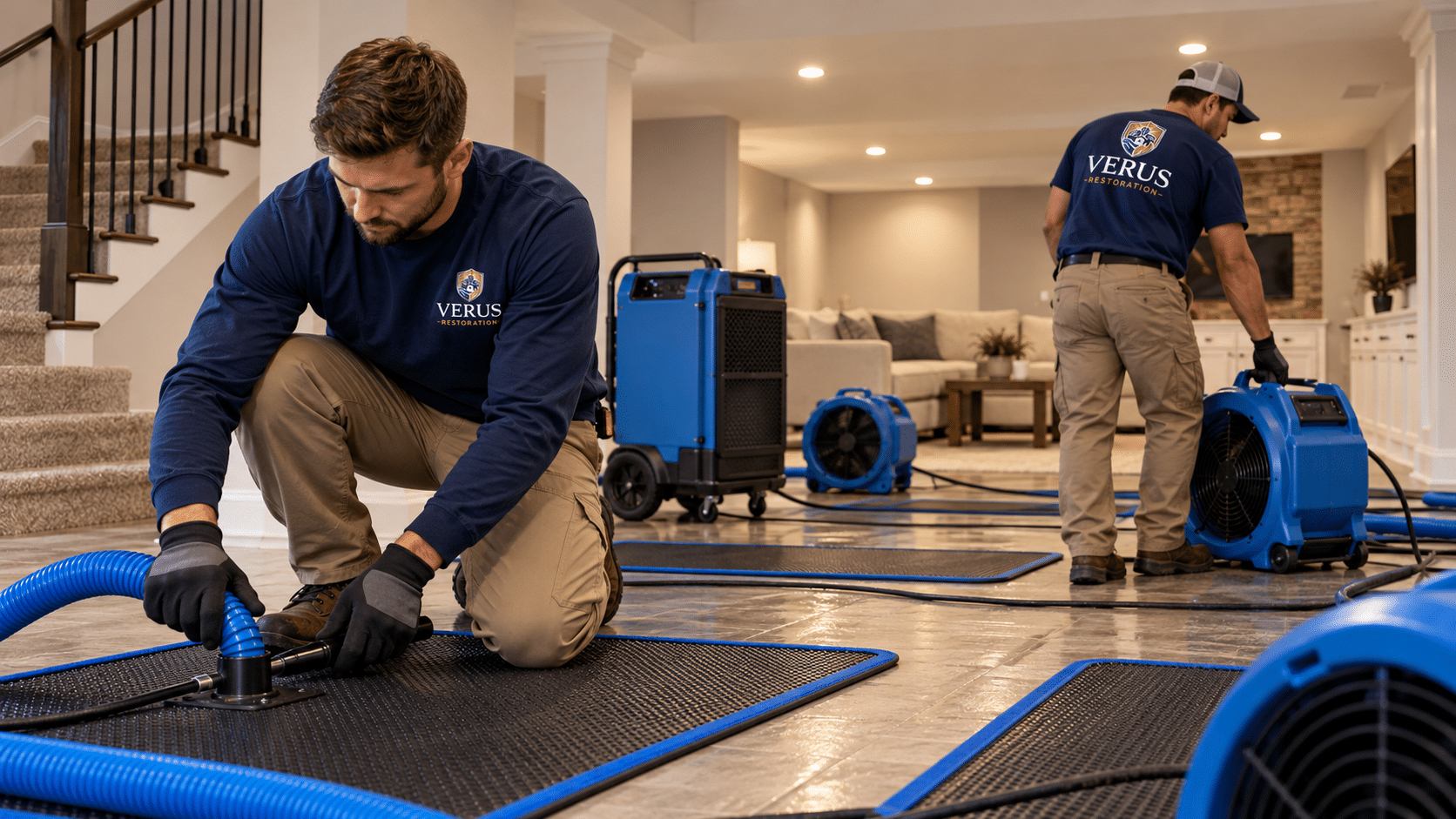
Structural drying & monitoring
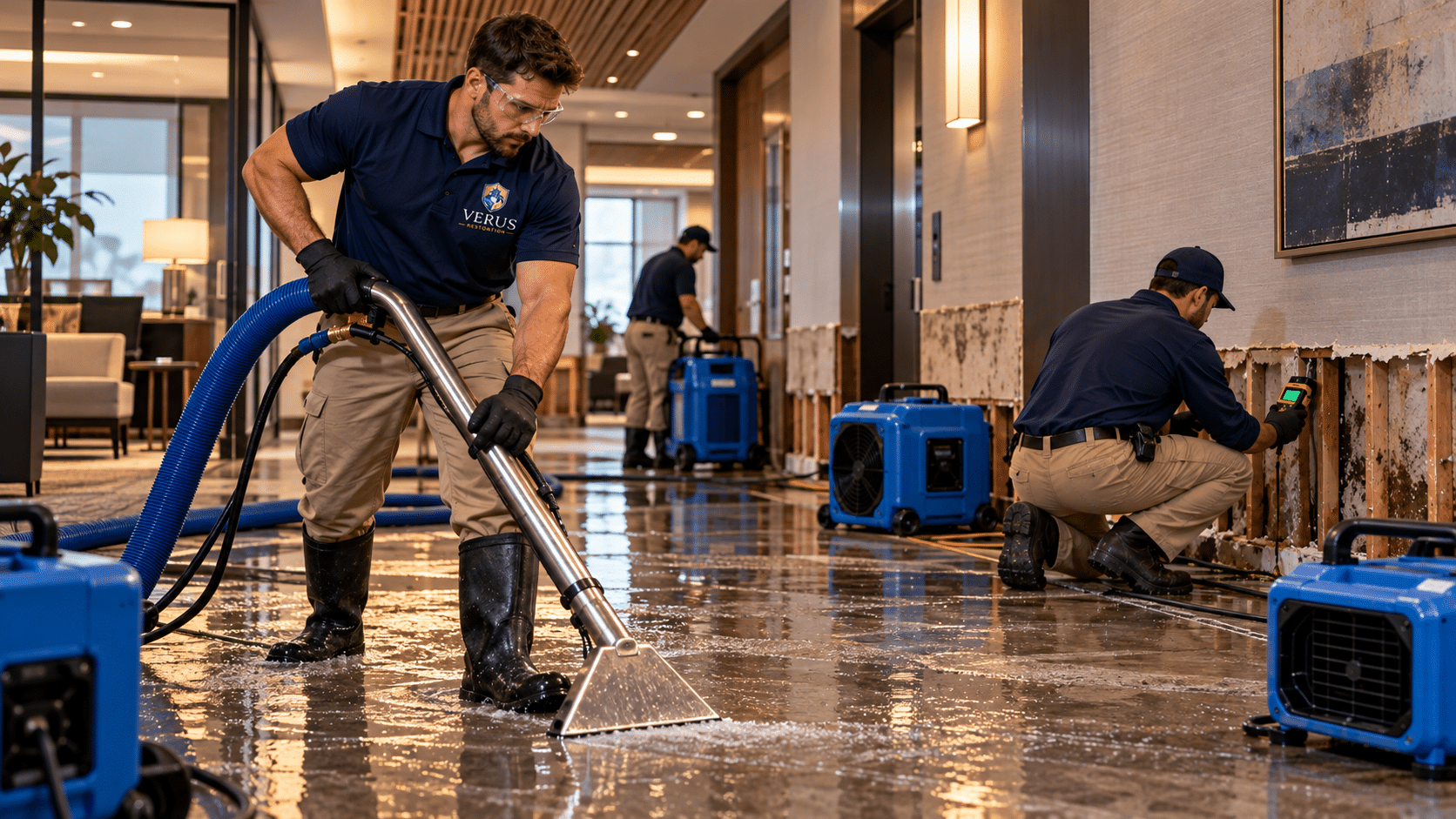
Air movers and commercial dehumidifiers run until moisture readings in framing, slab and remaining materials hit dry standard — checked and recorded daily, not guessed.
-
Repairs & reconstruction
Drywall, insulation, trim, flooring, paint — the same team rebuilds the finished space, so there’s no gap between “dry” and “done.”
Everything a Flooded Basement Needs, From One Team
Basement flooding touches several of our services at once. We bring them as one project with one point of contact.
- Water Water Removal Pump-out and extraction of standing water from floors, carpet and sub-floors. Emergency water removal
- Water Drying & Dehumidification Commercial drying equipment and daily moisture monitoring until the structure is verifiably dry. Structural drying
- Mold Mold Removal & Remediation If the water sat too long, containment and remediation of any growth that followed. Mold remediation
- Recovery Contents Cleaning & Storage Pack-out, cleaning and secure storage for furniture, documents and belongings while the basement is restored. Contents restoration
- Rebuild Reconstruction Drywall, insulation, flooring, trim and finishes to bring a finished basement back. Repairs & reconstruction
- Water Water Damage Repair Repair of everything the water touched, upstairs or down, from a single leak to a whole floor. Water damage repair
The Damage You Can See Is Rarely All of It
Most Metro Atlanta basements are finished living space — bedrooms, home offices, media rooms — which means water goes behind drywall, under laminate and into carpet pad where it stays wet long after the surface looks fine. We open what needs opening, dry what’s behind it, and document moisture readings so you know it’s actually dry before it’s closed back up.
Crawl spaces get the same treatment: standing water removed, saturated insulation and vapor barrier replaced, framing dried and treated, and the drainage problem that caused it identified so you aren’t calling us again next spring.
Why Metro Atlanta Homeowners Call Verus for Basement Flooding
-
Fast, around the clock
Basements flood at 3 a.m. during a storm, not at 9 a.m. on a Tuesday. We’re open 24 hours, 7 days a week.
-
Dry means verified
We measure moisture in framing, slab and materials and record it daily. The equipment comes out when the numbers say so.
-
Cleanup and rebuild, one team
No handoff to a second contractor for the drywall and flooring. The crew that dried it is the crew that finishes it.
-
Documented for your claim
Photos, moisture logs, removed-materials lists and a clear scope — the record you need for your insurance conversation.
Basement Flooding Cleanup Across Metro Atlanta
Based in Norcross, we serve the northern and eastern Atlanta suburbs across Gwinnett, DeKalb, Fulton and Cobb counties, with coverage into Northeast Georgia.
Basement Flooding FAQs
How long does it take to dry out a flooded basement?
Bulk water is usually out the same day. Structural drying typically takes several days, depending on how much water there was, how long it sat, what materials got wet and the humidity outside. We don’t pull equipment until moisture readings confirm the structure is dry.
Is basement flooding covered by homeowners insurance?
It depends on the cause. Sudden plumbing failures are commonly covered; water that comes in from outside (surface flooding, groundwater) and sump pump or sewer backups often require separate flood insurance or a specific endorsement. Check your policy, and we’ll document the damage and the work in detail so you have what you need for the conversation with your adjuster.
Can I clean up a flooded basement myself?
For a small amount of clean water on a sealed concrete floor, possibly. For anything that reached drywall, carpet, insulation or finished space — or any water from outside or a sewer line — no. The risk isn’t the water you can see; it’s the moisture left behind in materials that leads to mold and structural damage.
Will mold grow after a basement flood?
It can start within 24 to 48 hours in wet materials. Fast extraction, removal of saturated porous materials, antimicrobial treatment and verified drying are how we prevent it. If it has already started, our mold remediation team handles it as part of the same project.
How do I keep my basement from flooding again?
Most repeat flooding comes down to drainage: extending downspouts away from the foundation, correcting grading, keeping gutters clear, adding a battery backup to the sump pump, and sealing foundation cracks. We’ll tell you what we found so you can fix the cause, not just the symptom.
Water in the basement right now? Every hour it sits, more of your basement is lost. Let’s get it out.
Prefer email? [email protected] · Open 24 hours · Norcross, GA · Serving Metro Atlanta & Northeast Georgia