
Smoke Damage Restoration · Metro Atlanta · Open 24 Hours
Smoke Damage Restoration in Metro Atlanta
Soot and smoke residue cleaning, odor removal at the source, contents and HVAC cleaning after kitchen fires, puffbacks, electrical fires and smoke from nearby fires — Norcross‑based, serving Metro Atlanta 24 hours a day.
The Fire Was Small. The Smoke Went Everywhere.
Soot and smoke residue cleaning and odor removal for homes and businesses — including the rooms, and the houses, where nothing actually burned
Verus Restoration provides smoke damage restoration throughout Metro Atlanta and Northeast Georgia — removing soot and smoke residue from surfaces, structure and contents, treating odor at its source rather than masking it, and cleaning the HVAC system that spread it. After a contained kitchen fire, a furnace puffback, an electrical fire, or smoke that drifted in from a neighbor’s unit, we bring the property back to clean surfaces and clean air.
- Availability
- Open 24 hours, 7 days a week
- Service
- Residue cleaning, odor removal, contents, HVAC
- Situations
- Kitchen & protein fires, puffbacks, electrical, neighboring fires
- Area
- Norcross, GA · Metro Atlanta
Smoke damage is a clock. Soot is acidic: within hours it discolors paint and finishes, within days it etches metal, glass and stone and yellows plastics permanently. Odor binds into drywall, insulation, fabric and wood, and every attempt to wipe it with a household cleaner drives it deeper. The sooner the right cleaning starts, the more of the property is saved rather than replaced. Call or text (404) 983-0966.
Not All Smoke Is the Same — and Each Kind Is Cleaned Differently
What burned, how hot and how fast decides what’s on your walls. Using the wrong method on the wrong residue is how smoke damage gets smeared in instead of removed.
- Dry smoke — fast, hot fires; a fine powdery soot that travels far and is the easiest to lift when it hasn’t been touched
- Wet smoke — slow, smoldering fires; sticky, smeary residue with a heavy odor that clings to every surface
- Protein residue — kitchen and cooking fires; nearly invisible, but it discolors paint and varnish and carries an intense, lingering odor
- Fuel-oil soot — furnace puffbacks; an oily black film across whole floors of a building, often with no fire at all
- Plastics and electrical residue — sticky, acrid and corrosive to electronics and metal
- Where it hides — ductwork, closets, inside cabinets and drawers, behind pictures, attic insulation, and rooms three floors from the source
What Not to Do After Smoke Damage
The instinct to start cleaning is the expensive one. Wiping soot off walls, ceilings or furniture smears it into the finish. Household cleaners set protein residue and stains. Running the HVAC pushes soot through every duct and register in the building. And washing smoke-damaged clothes in a home machine can fix the odor in permanently.
- Open windows if the weather allows, and keep the HVAC off
- Limit traffic through affected rooms — soot tracks into carpet and up stairs
- Photograph everything before it’s touched
- Note what burned — food, a dryer, wiring, a furnace — it tells us which residue we’re cleaning
- Don’t discard anything until it’s documented; more can be saved than you’d think
- Call (404) 983-0966 — we’ll tell you what to leave alone and when we’ll be there
Our Smoke Damage Restoration Process
-
Assess & identify the residue
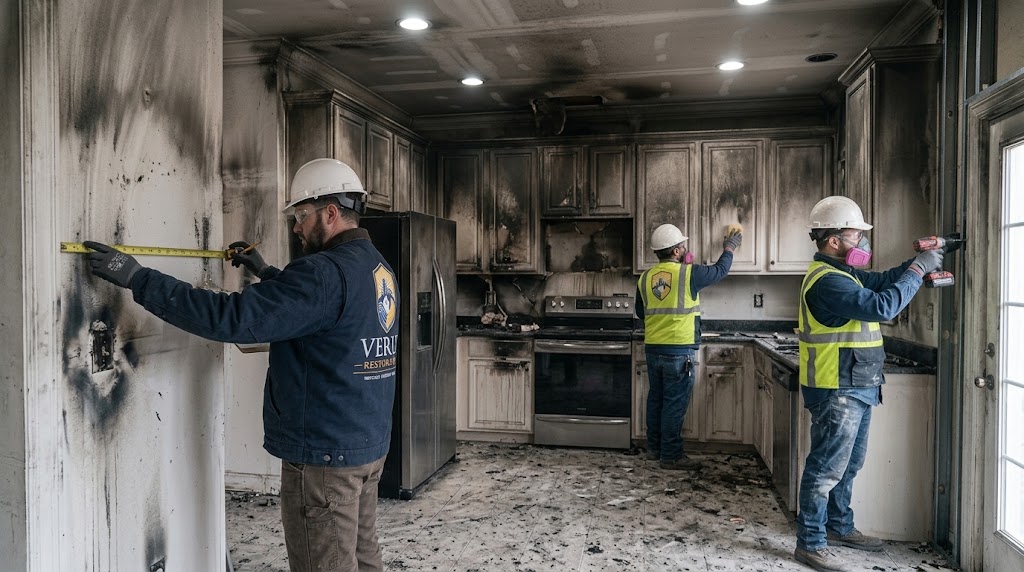
We trace how far smoke traveled, test surfaces to identify the residue type, and document every affected room and item for your claim.
-
Protect & contain
Unaffected areas are sealed off, air filtration is set up to capture airborne soot, and contents are packed out for cleaning so the structure can be worked on.
-
Clean the structure
Dry soot is lifted before any moisture touches it; wet, protein and oily residues get the wet-cleaning methods they need. Ceilings, walls, floors, cabinets, fixtures — every surface, in the right order.
-
Remove the odor at the source
Materials that will never stop smelling are removed; the rest is cleaned, treated and where needed sealed. Professional deodorization — thermal fogging, hydroxyl or ozone treatment, depending on the space — reaches what cleaning can’t. Ductwork is cleaned so the system stops recirculating it.
-
Restore finishes & return contents
Odor-sealing primer and fresh paint where needed, replacement of what couldn’t be saved, cleaned contents returned and placed, and a final walk-through by nose as much as by eye.

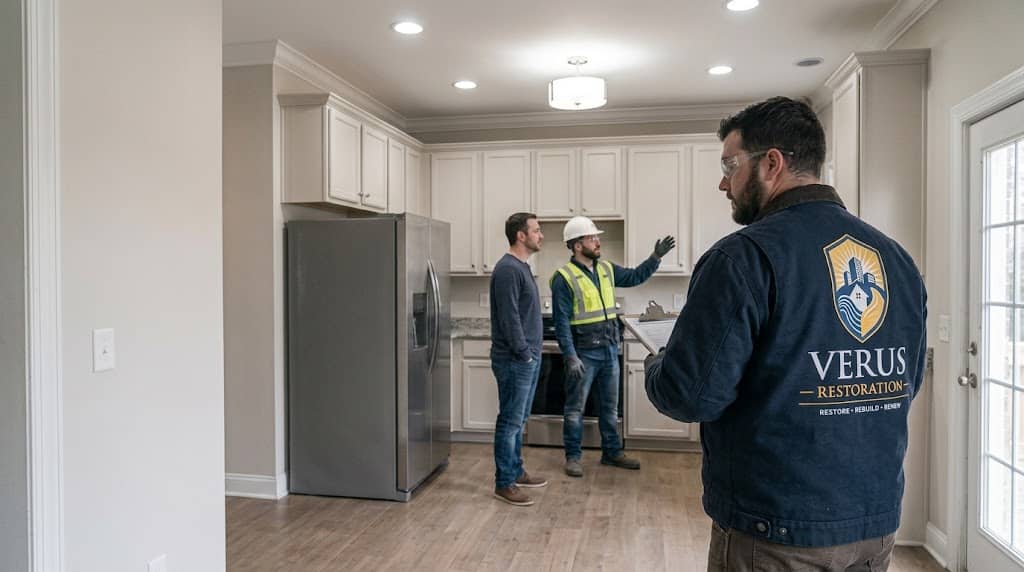
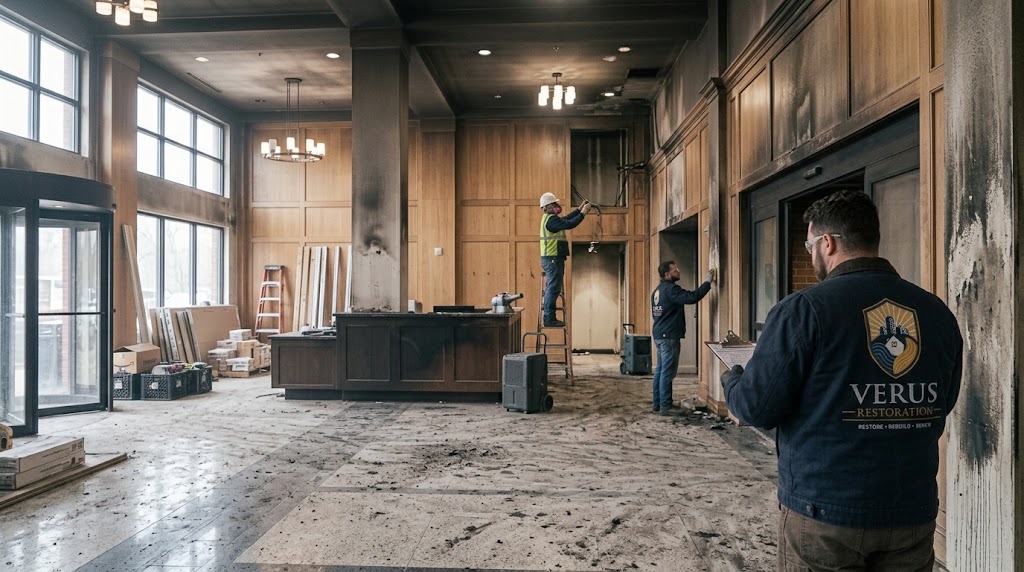
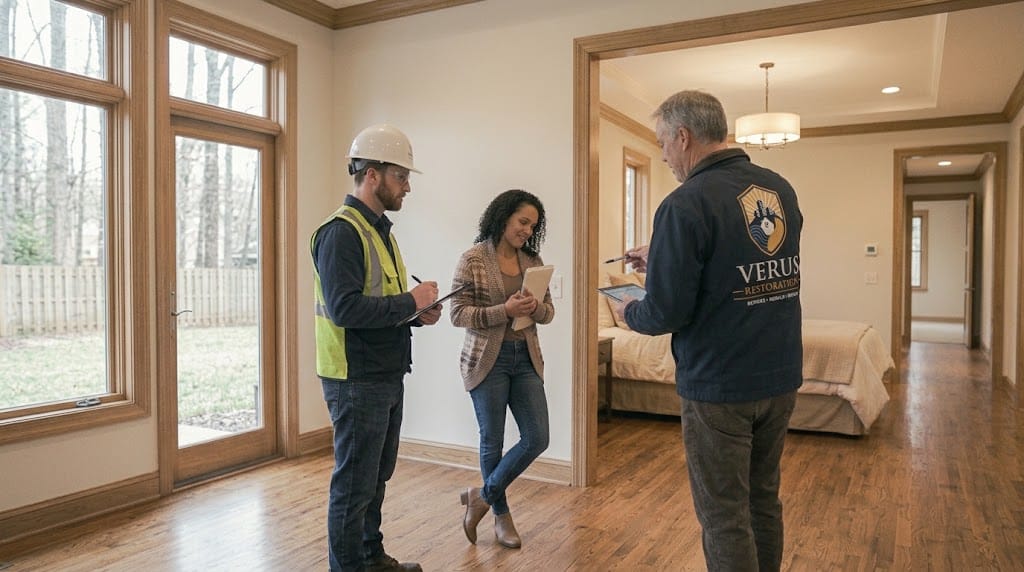
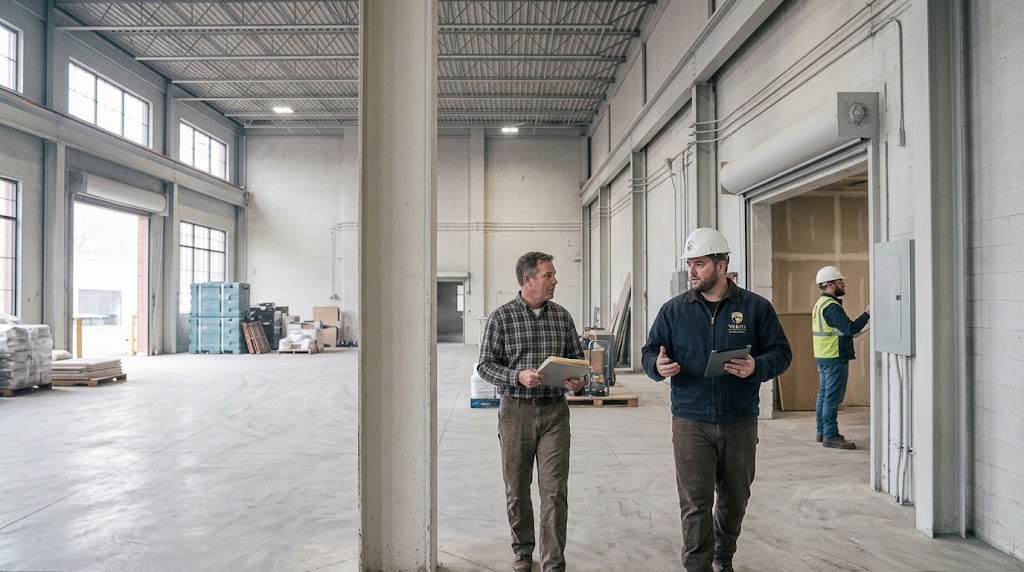
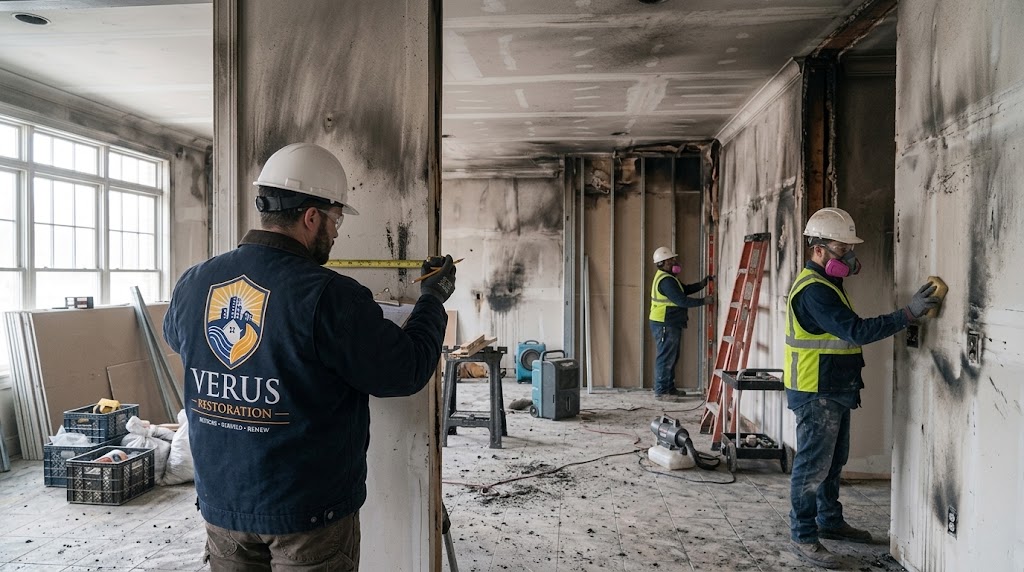
Smoke Damage Is Rarely the Whole Story
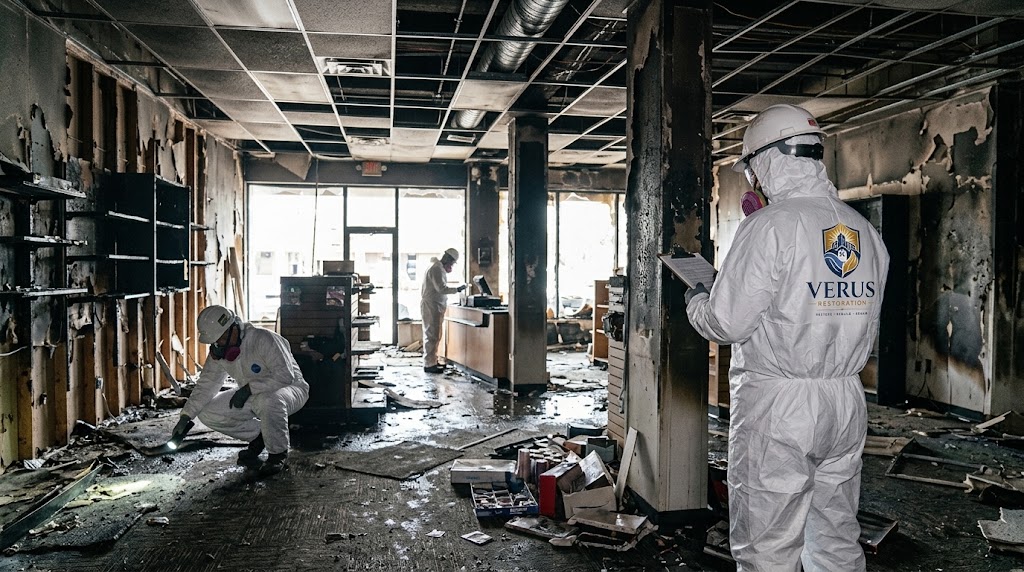
Where there was a fire, there’s usually burned structure and firefighting water too. Where there wasn’t, contents and air quality are still the job. One team covers all of it.
- Fire Fire & Smoke Damage Board-up, structural cleanup and reconstruction when the fire itself did damage, not just the smoke. Fire & smoke restoration
- Recovery Contents Cleaning & Storage Clothing, furniture, documents and keepsakes cleaned and deodorized off-site while the structure is treated. Contents restoration
- Water Water Damage Repair The water used to put a fire out is a water loss of its own, handled in the same visit. Water damage repair
- Rebuild Reconstruction Replacing the drywall, insulation and finishes that held too much odor to be saved. Repairs & reconstruction
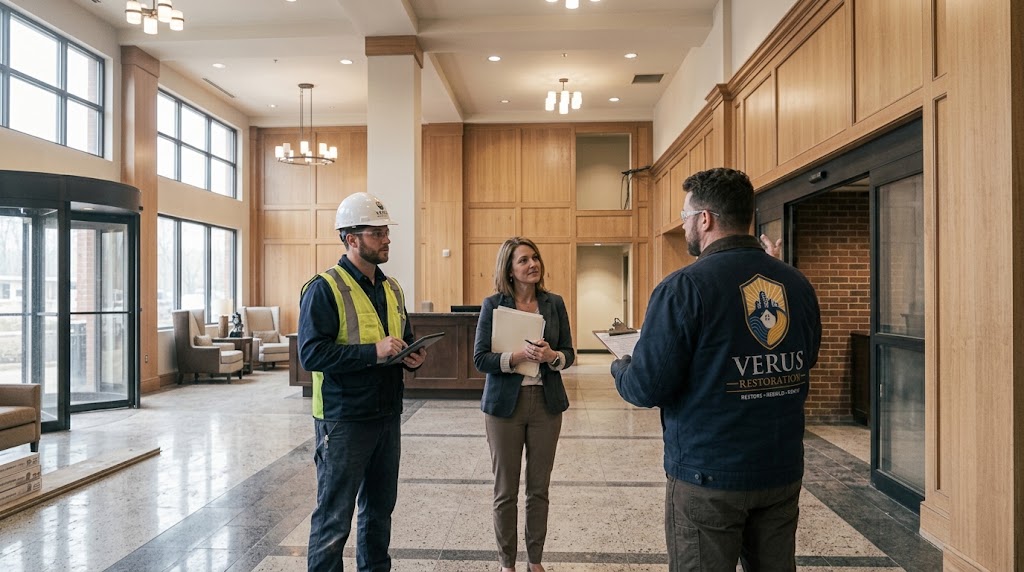
- Commercial Commercial Damage Restoration Restaurant, office and multifamily smoke losses, phased to keep unaffected space open. Commercial restoration
- Prepare Emergency Planning A written fire and smoke plan for your home or building, before you ever need it. Emergency response planning
Smoke Damage Without a Fire in Your Home — and Why the Smell Comes Back in July
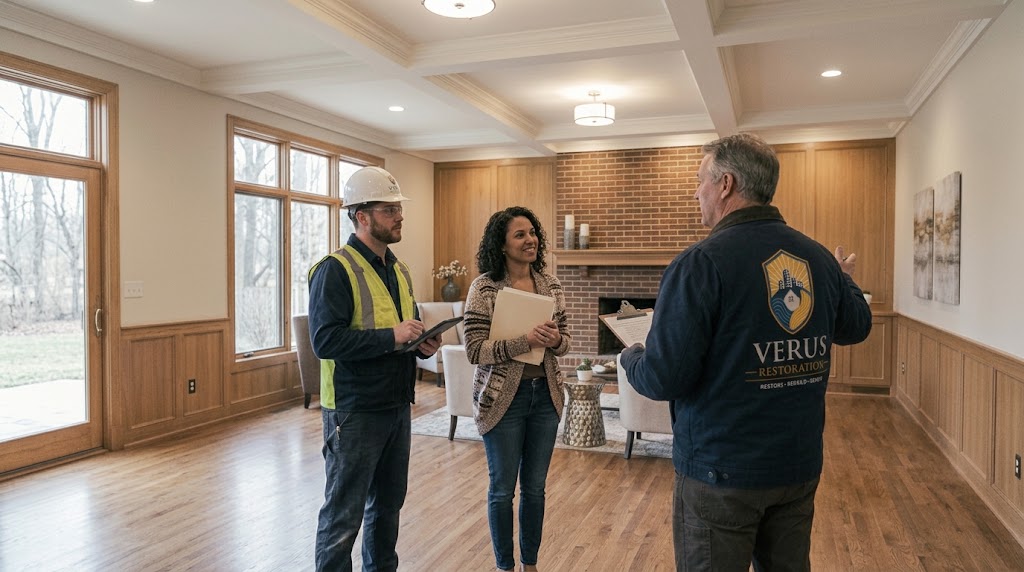
In Metro Atlanta’s townhomes, condos and apartment communities, some of the worst smoke damage we see is in units where nothing burned: a neighbor’s kitchen fire that pushed smoke through shared walls and hallways, or a furnace puffback that coated three floors in oily soot overnight. Your property is just as affected, your contents just as damaged, and your insurance policy generally treats it as a covered smoke loss. We document it the same way we would a fire in your own unit.
The second surprise is seasonal. Smoke odor that seems gone in March can return in July, because humidity reactivates residue left in porous materials. That’s why removing odor-holding materials, cleaning the HVAC system and sealing surfaces matters more than any fragrance or fogging alone. If a smell comes back, the source was never removed.
Why Metro Atlanta Property Owners Call Verus for Smoke Damage
-
The right method for the residue
Dry soot, wet smoke, protein film and puffback oil are four different problems. We identify which one we’re cleaning before anyone touches a wall.
-
Whole property, including the ducts
Every room smoke reached is cleaned, and the HVAC system that carried it there is cleaned too — otherwise it keeps delivering.
-
Odor removed, not masked
Source removal first, deodorization second, fragrance never. The test is whether it’s still gone on the first humid day.
-
Contents and structure together
Your belongings are cleaned by the same team restoring the building, on the same schedule, under one inventory.
Smoke Damage Restoration Across Metro Atlanta
Based in Norcross, we clean and deodorize smoke-damaged homes and businesses across Gwinnett, DeKalb, Fulton and Cobb counties, with coverage into Northeast Georgia.
Smoke Damage Restoration FAQs
How do you get smoke smell out of a house?
By removing it, not covering it. That means cleaning every surface the residue reached, removing materials that can’t be cleaned (often insulation, some drywall and carpet pad), cleaning the HVAC system, and then treating the air and the remaining materials with professional deodorization. Fragrances and consumer odor sprays mask the smell for days; the source is still there.
Can smoke damage be cleaned without replacing everything?
Usually, yes. Hard surfaces, most painted walls, cabinets, furniture and the majority of contents can be cleaned and deodorized when the right method is used early. What typically has to go is porous material that absorbed odor — insulation, heavily affected drywall, carpet pad — and anything melted or charred.
Why does the smoke smell come back on humid days?
Because odor residue left in porous materials reactivates when humidity rises — a Georgia summer is the ultimate test of a smoke job. A smell that returns means residue was left behind in a wall cavity, the insulation or the ductwork. The fix is removing or sealing that source, not more deodorizer.
Is smoke damage from a neighbor’s fire covered by my insurance?
Generally, yes — smoke damage to your unit and belongings from a fire elsewhere in the building is typically a covered loss under your own policy, which may then recover from the responsible party’s insurer. Check your policy; we document the damage to your unit the same way we would for a fire of your own.
Should I try to clean smoke damage myself?
A light haze on hard, non-porous surfaces after a very small incident can sometimes be handled with the right dry-cleaning sponge and no water. Anything more — ceilings, painted walls, fabrics, cabinets, a smell that fills the house — is more likely to be set permanently by household cleaning than fixed by it. If you’re unsure, don’t touch it and call.
Is it safe to stay in the house with smoke damage?
Soot and smoke residue can irritate the eyes, skin and airways, and people with asthma, allergies or other sensitivities often feel it quickly. Light damage in one room with good ventilation may be livable while work is scheduled; heavy residue, a strong odor throughout, or residue in the HVAC system are reasons to stay elsewhere until cleaning is done. If anyone has symptoms, talk to a doctor — we restore buildings, not people.
If you can still smell it, it isn’t gone. Call or text and we’ll find the source.
Prefer email? [email protected] · Open 24 hours · Norcross, GA · Serving Metro Atlanta & Northeast Georgia