
Drying & Dehumidification · Metro Atlanta · Open 24 Hours
Structural Drying & Dehumidification in Metro Atlanta
Commercial drying equipment, daily moisture monitoring and verified dry‑standard results after water damage — for homes and businesses from Norcross across Metro Atlanta, 24 hours a day.
Dry Isn’t a Feeling. It’s a Number We Can Show You.
Structural drying and dehumidification for homes and businesses after water damage — measured, monitored daily and verified, not guessed
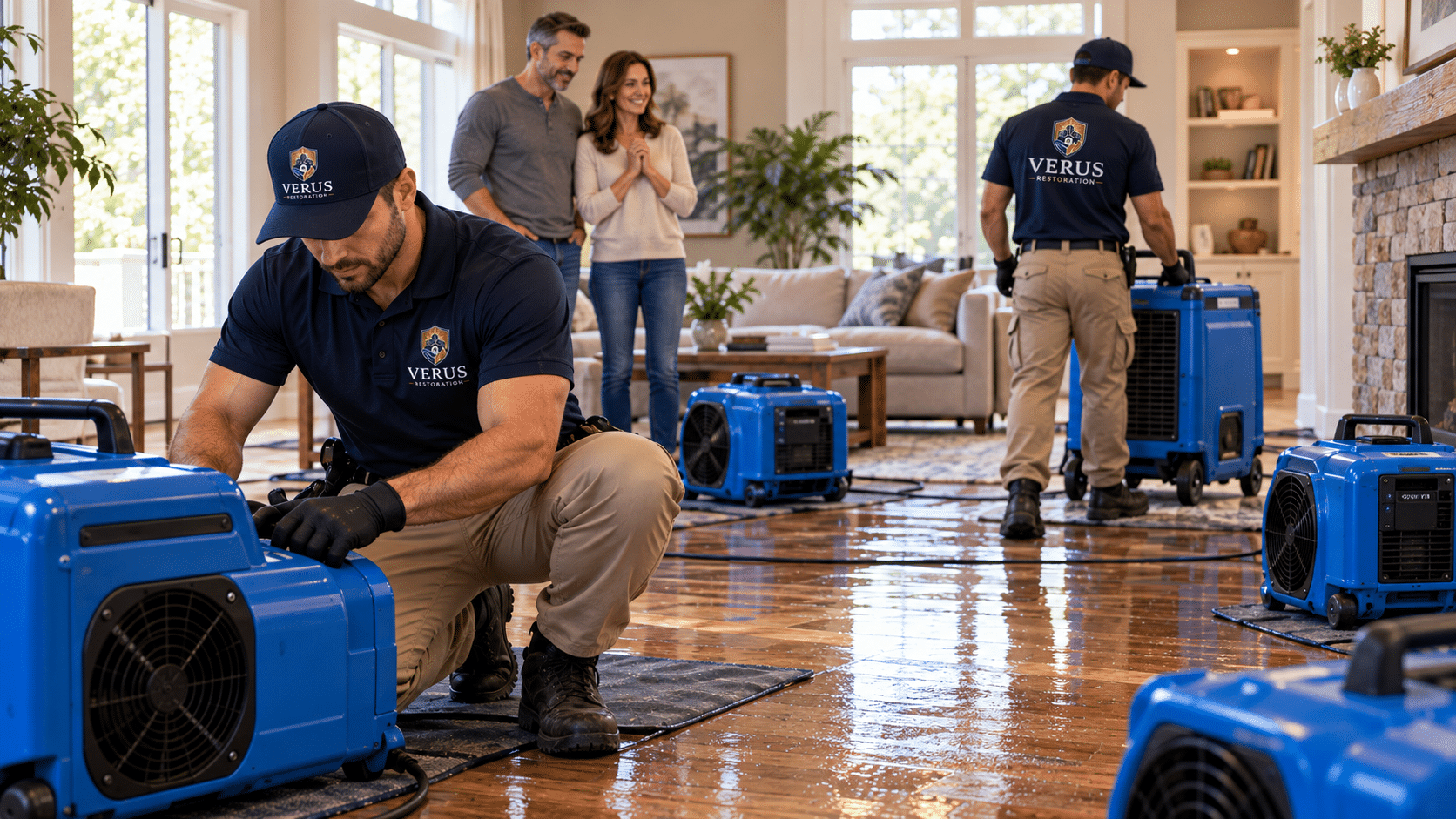
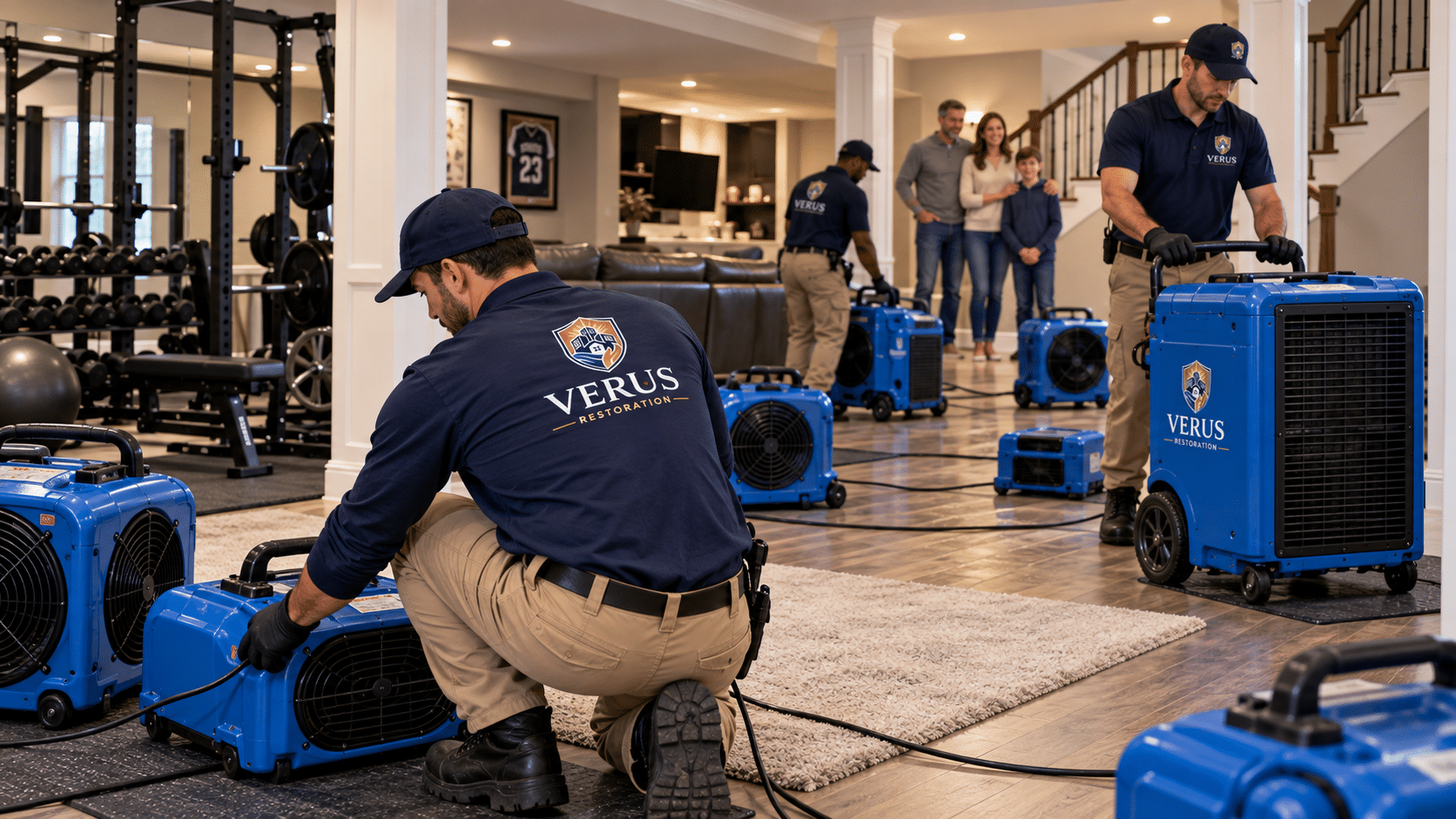
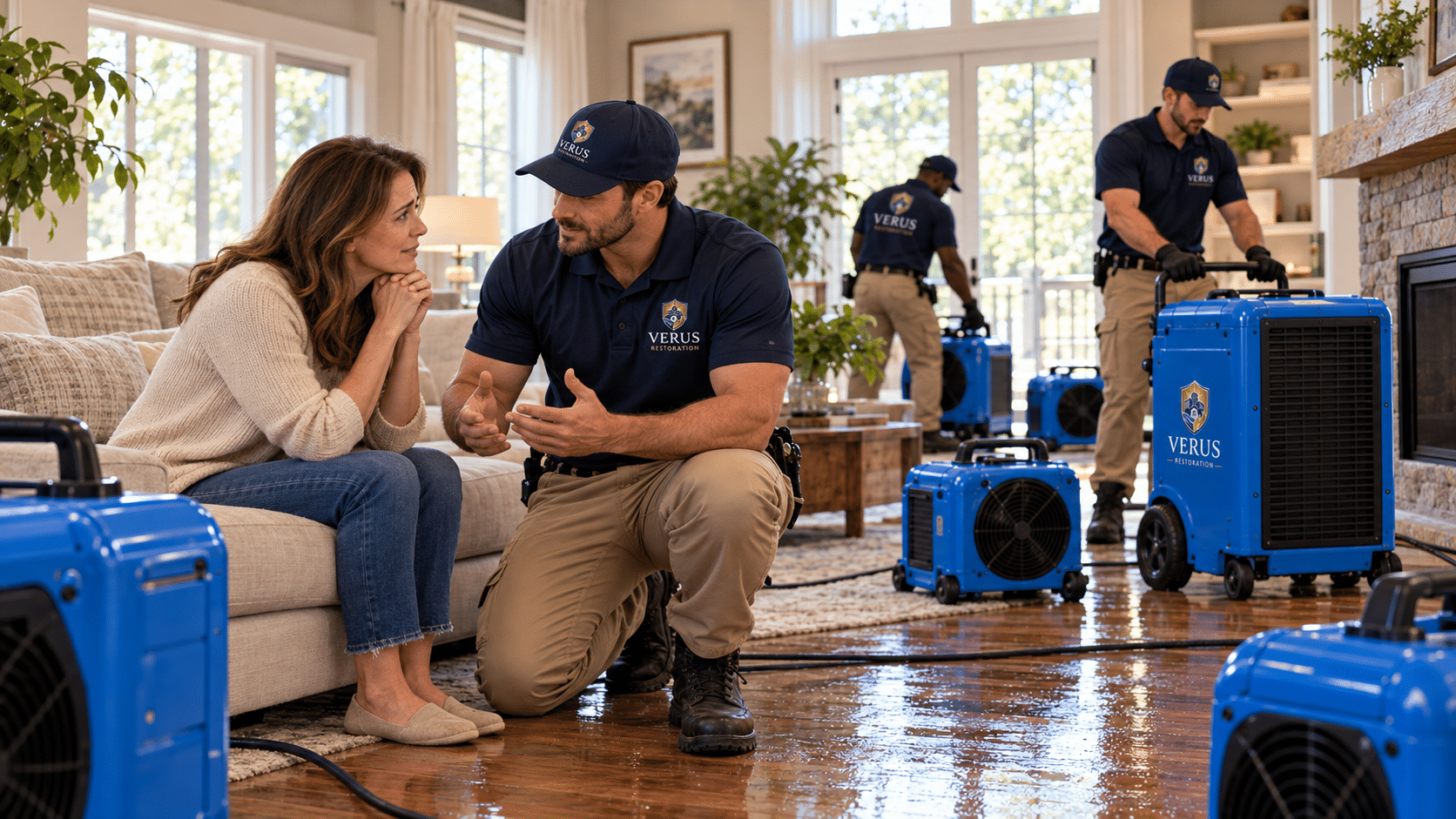
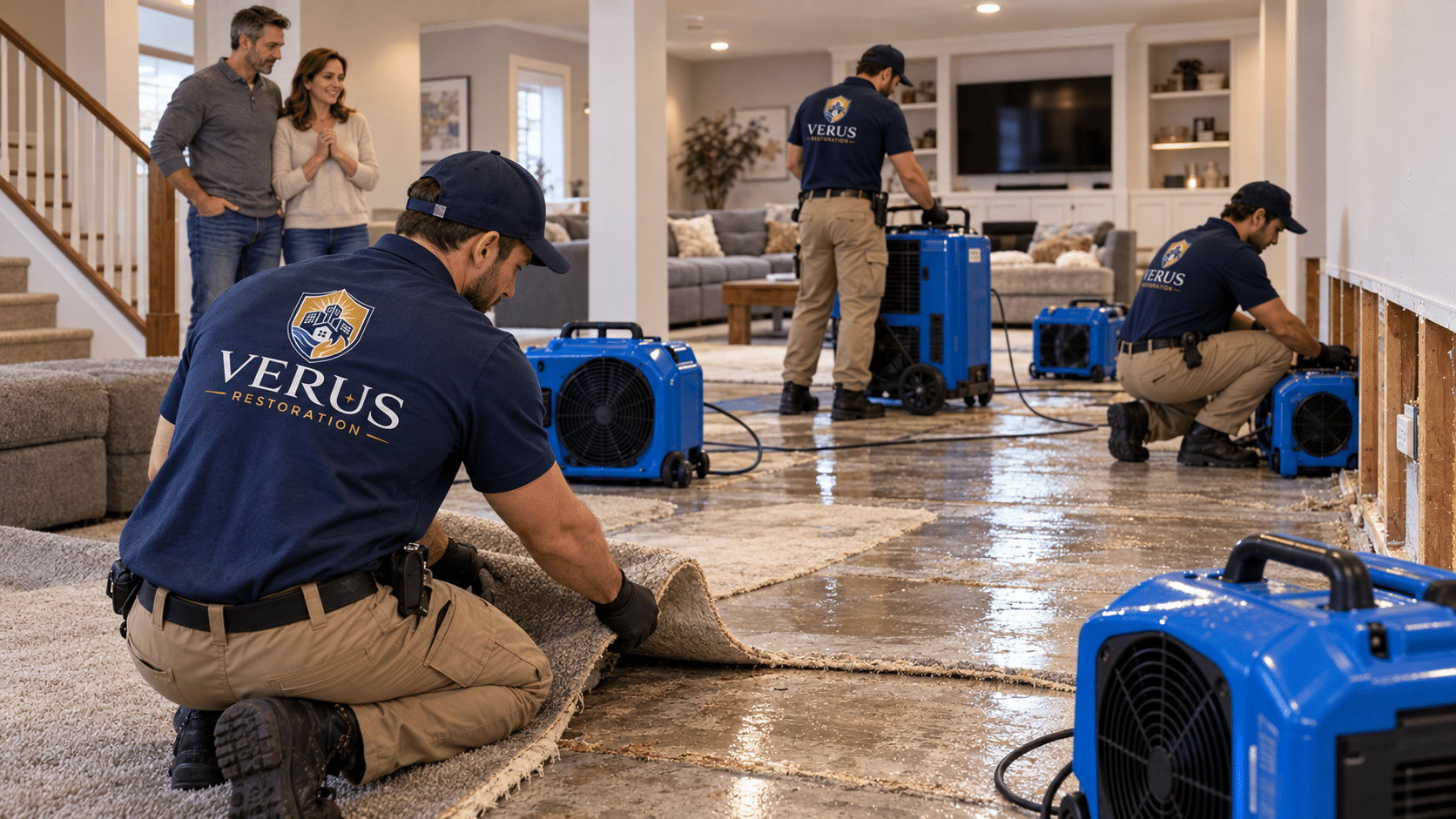
Verus Restoration provides structural drying and dehumidification throughout Metro Atlanta and Northeast Georgia. After the water is extracted, we place commercial air movers and dehumidifiers sized to the space, track moisture in walls, floors, framing and subfloor every day, and keep drying until every reading reaches dry standard — then document it. Fast, verified drying is what keeps a water loss from turning into a mold problem and a bigger rebuild.
- Availability
- Open 24 hours, 7 days a week
- Service
- Structural drying, dehumidification, moisture monitoring
- Equipment
- Air movers, commercial dehumidifiers, moisture meters
- Area
- Norcross, GA · Metro Atlanta
Metro Atlanta’s humidity works against you. Wet drywall, insulation and framing dry slowly on their own, and in the meantime mold can begin within a day or two, drywall wicks water upward, and hardwood floors cup and buckle. A floor that feels dry on top can still be saturated underneath. Call or text (404) 983-0966 and we’ll have equipment running the same day.
Surface-Dry Isn’t Dry: What Structural Drying Actually Reaches
Water travels. It runs under flooring, soaks into the bottom of drywall, pools on top of ceilings and disappears into insulation. Structural drying is about the materials you can’t see, not the ones you can.
- Drywall and insulation inside wall cavities
- Hardwood, laminate and tile substrates, and the subfloor beneath them
- Carpet and pad, where they can be saved
- Framing, joists and sill plates
- Basements and crawl spaces, including vapor barriers and foundation walls
- Cabinets and built-ins — the cavities behind and beneath them
- Concrete slabs, which hold moisture far longer than they look
- Ceilings and attic insulation after roof leaks and overhead plumbing failures
Every one of these gets a moisture reading before drying starts and every day after, so the drying plan follows the water instead of the floor plan.
What to Do Before the Equipment Arrives
Household fans and your air conditioner help a little, but they can’t dry inside a wall or under a floor. Relying on them for a few days is how a small loss becomes a mold remediation. Use them while you wait — just don’t mistake them for the fix.
- Stop the source — shut off the supply valve or main if it’s plumbing
- Get standing water off hard floors with a mop or wet-vac if it’s safe to do so
- Lift rugs, cushions, boxes and furniture off wet floors; put foil or blocks under furniture legs
- Open cabinet doors and drawers near wet areas so air can reach inside
- Don’t pull up flooring or cut into drywall yourself — it needs to be documented first
- Call (404) 983-0966 — drying works best in the first 24 hours
Our Structural Drying Process
-
Moisture mapping
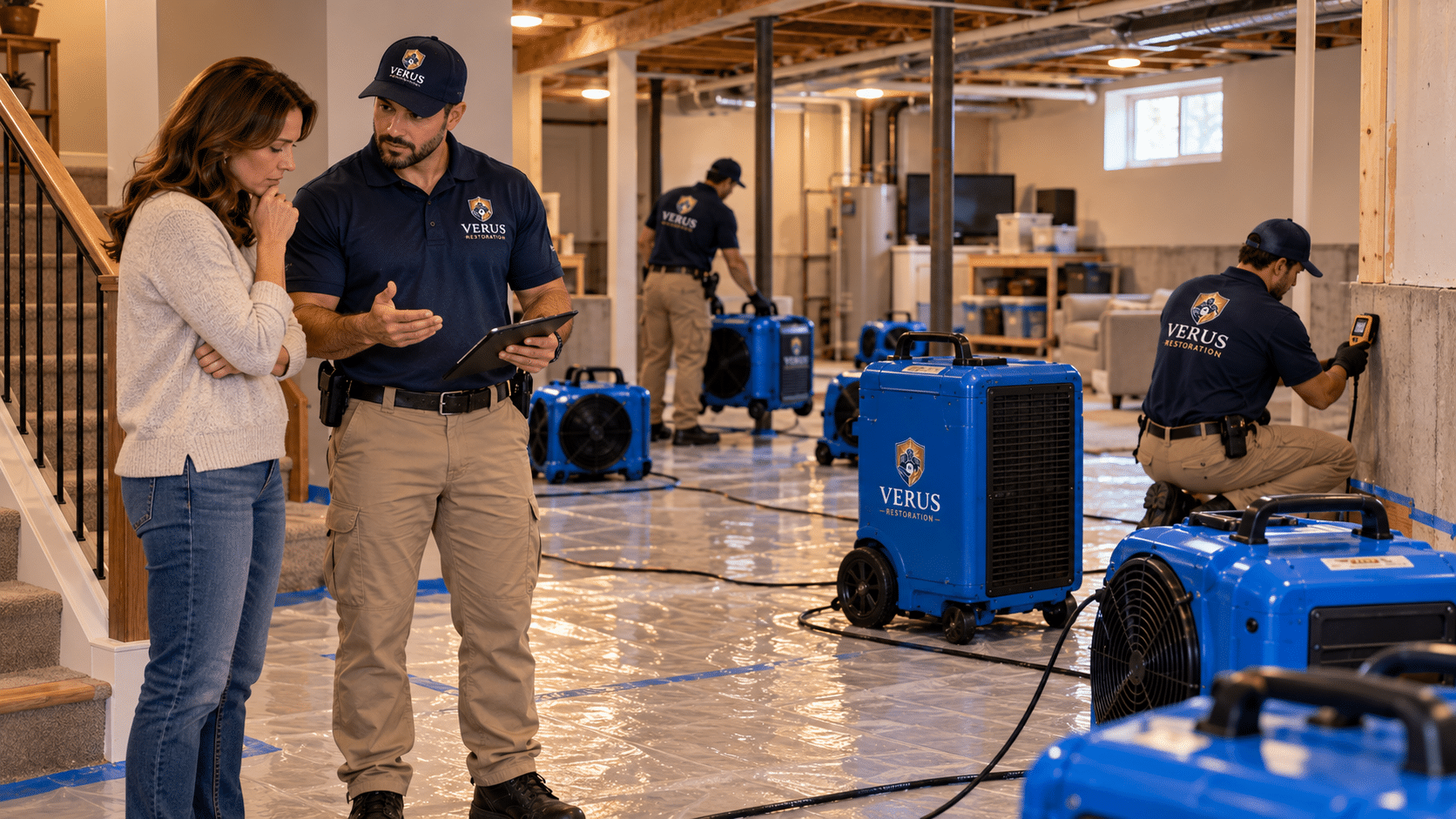
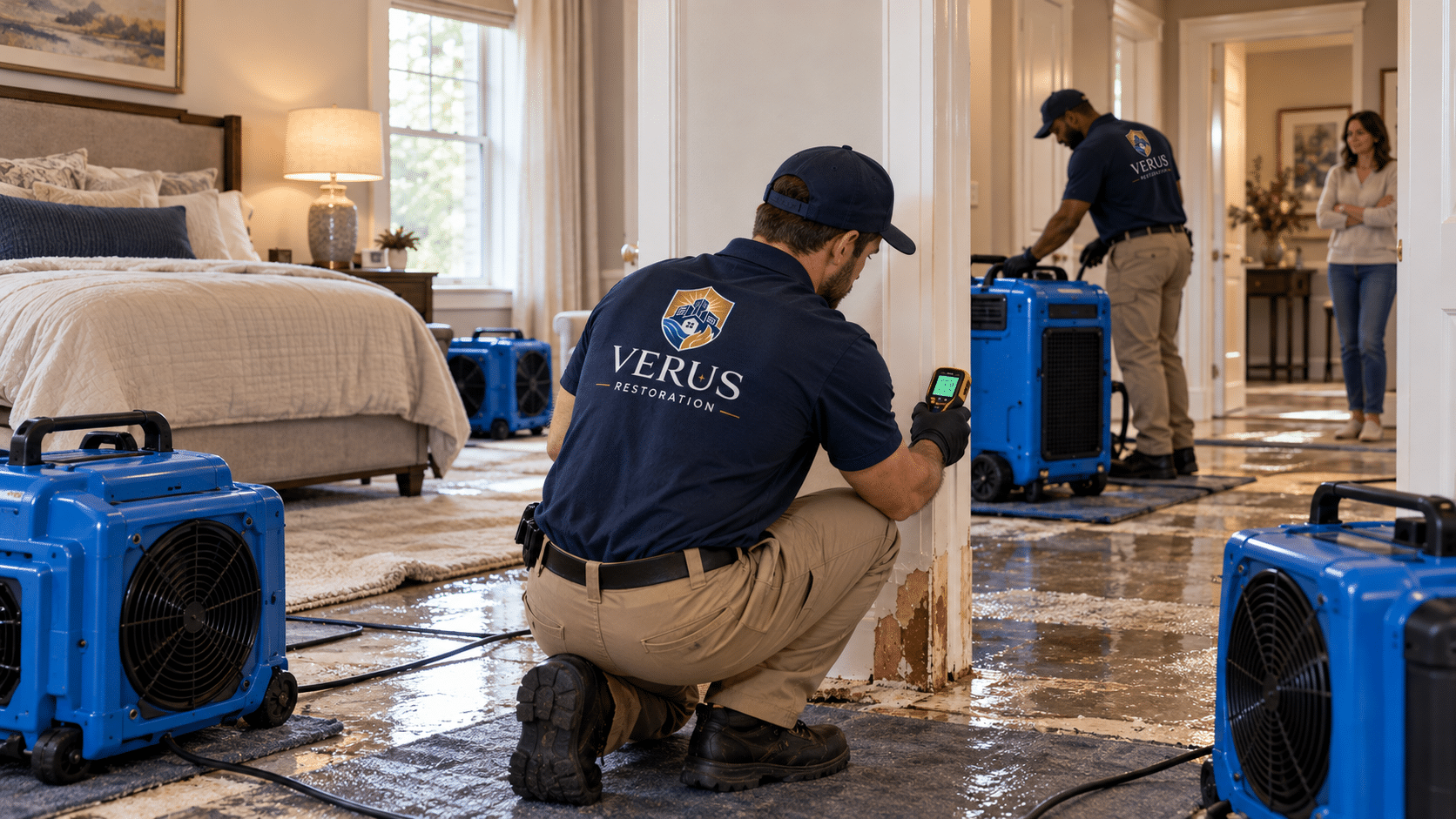
Meters and thermal imaging find every wet material, including the ones behind finishes. We record baseline readings and set a dry-standard target for each.
-
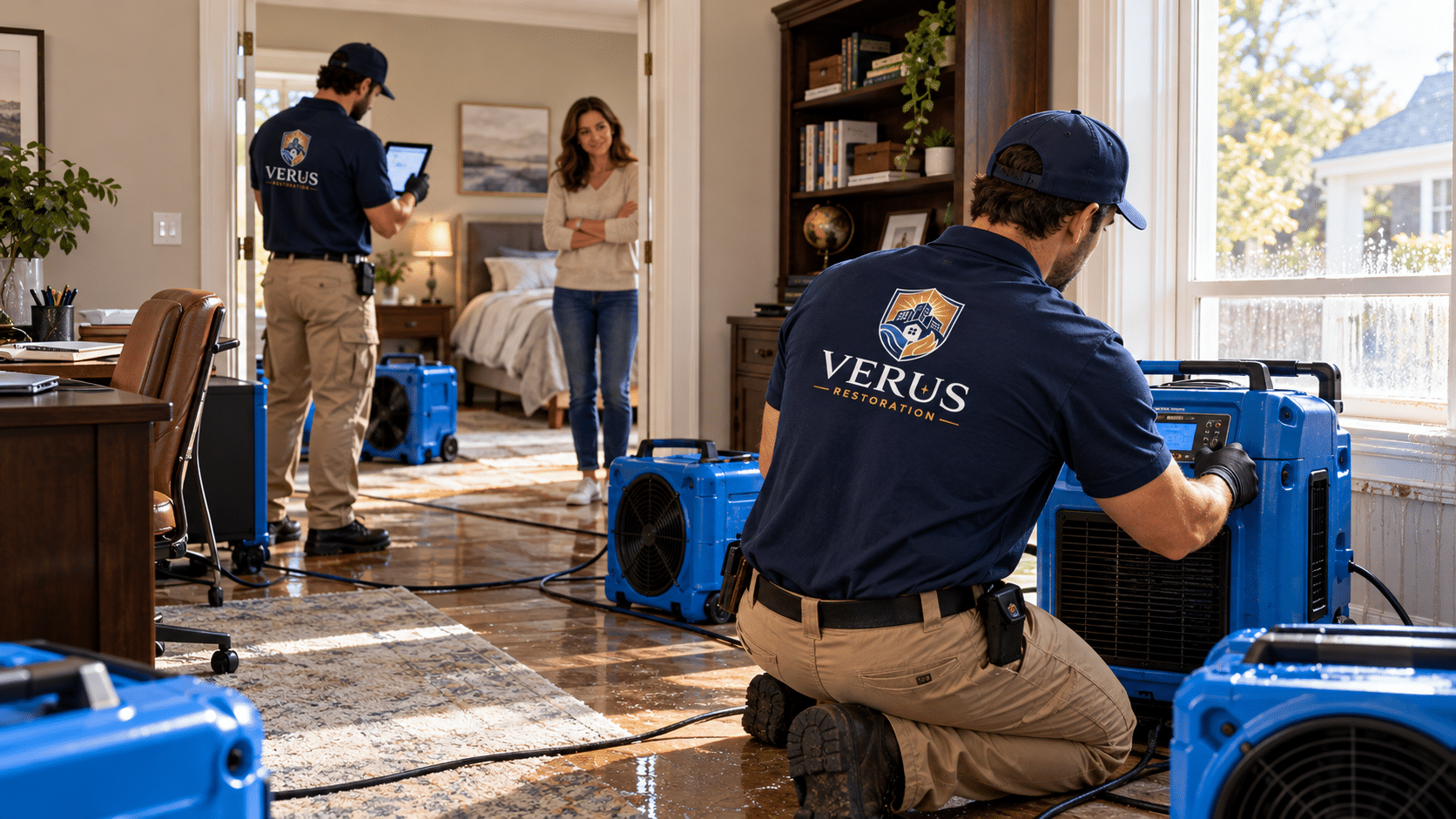
Drying plan & setup
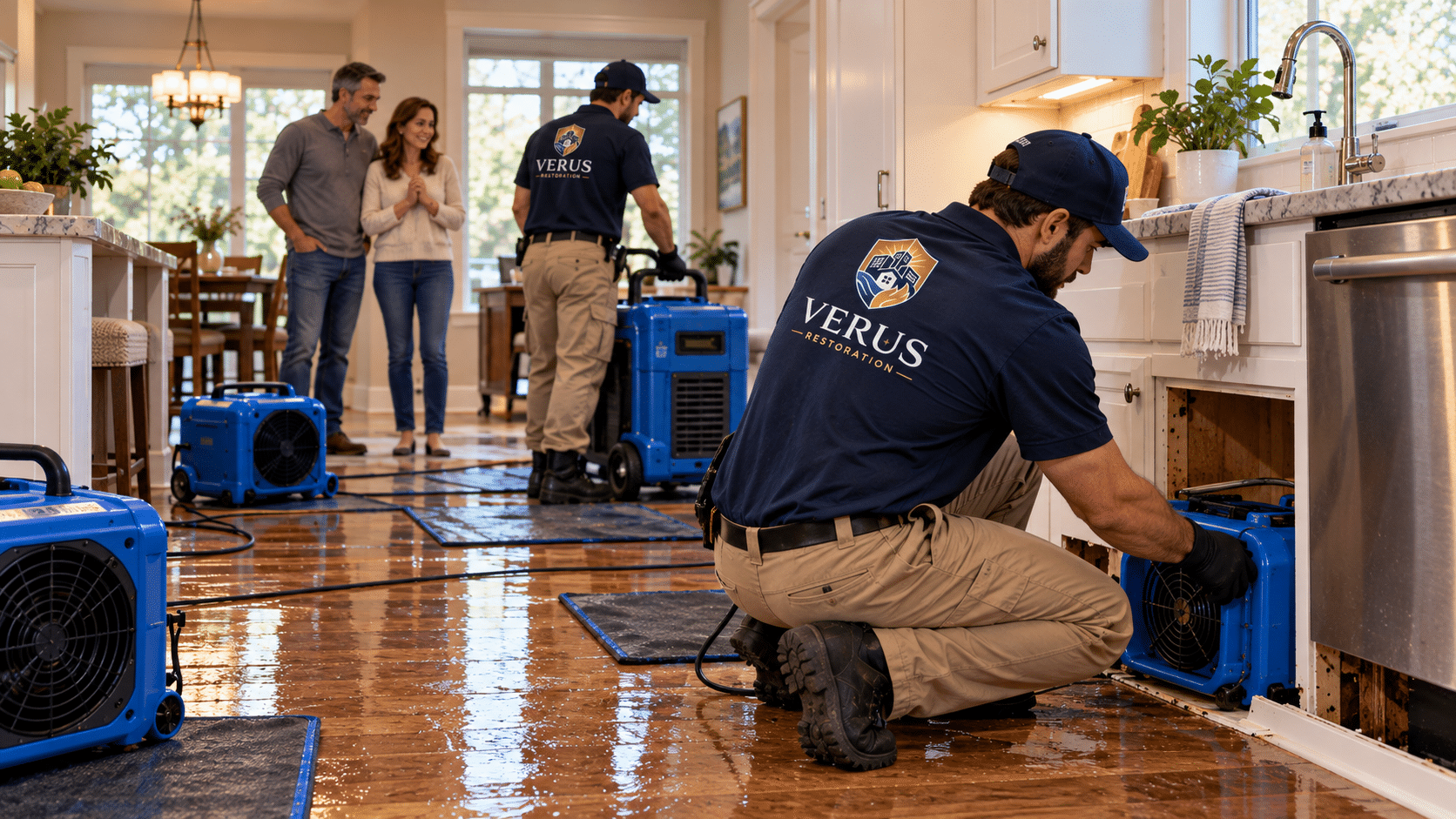
Air movers and dehumidifiers are sized to the room volume, the materials and the humidity, and placed where the water actually is. Containment keeps the drying zone tight.
-
Cavity & targeted drying
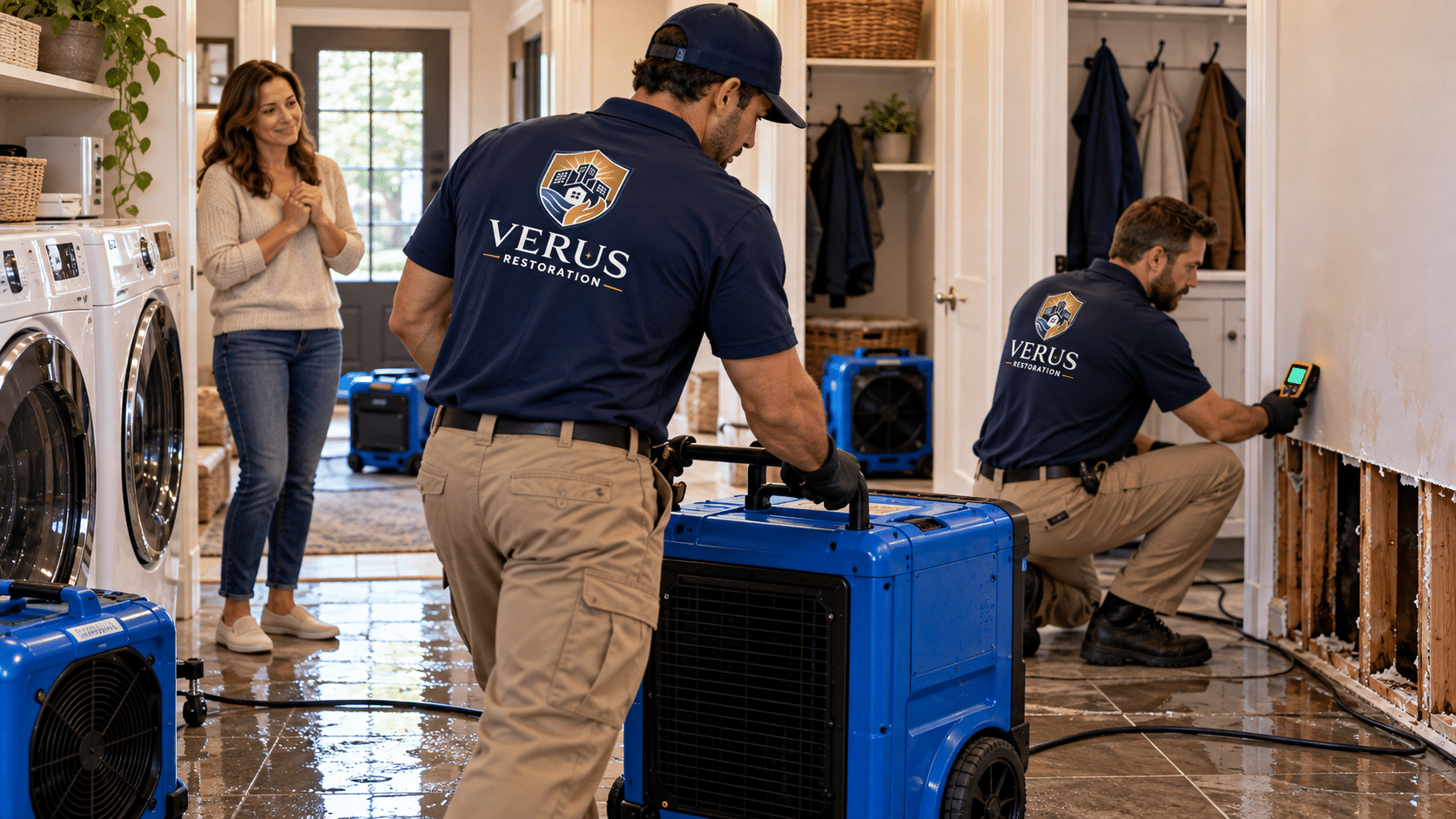
Where water is trapped behind cabinets, under flooring or inside walls, we use methods that dry those cavities without unnecessary demolition — and open what must be opened.
-
Daily monitoring
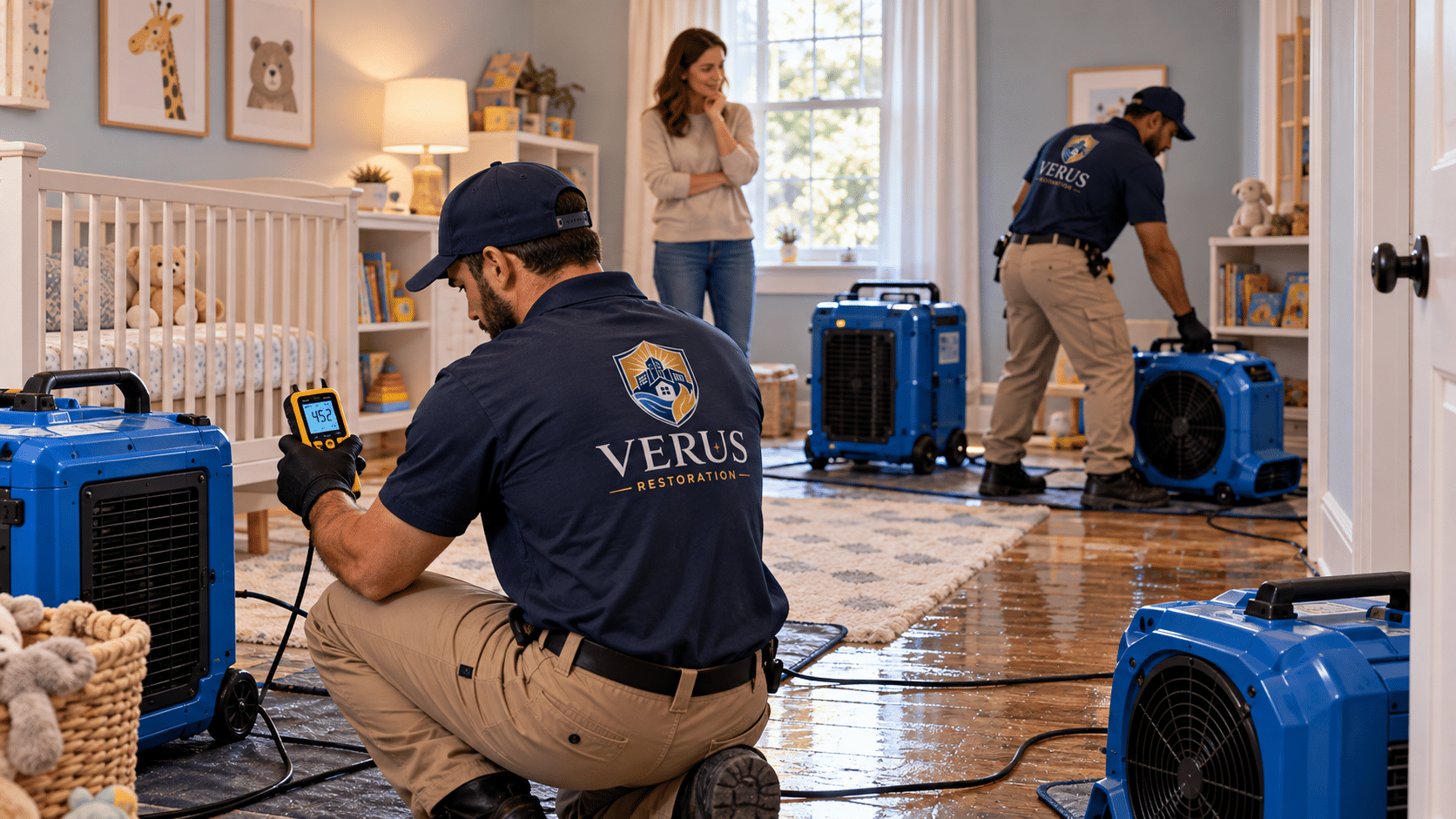
Readings in every affected material every day, equipment adjusted as the numbers move, and everything logged for you and your adjuster.
-
Verify & sign off
Equipment comes out when the readings hit dry standard — not before, not days after. You get the drying report, and repairs begin.
Drying Sits in the Middle of Every Water Loss
Extraction comes before it, repairs come after it, and mold is what happens when it’s skipped. One team handles the whole sequence.
- Water Water Removal Pump-out and extraction first: the less water left in the structure, the faster drying goes. Emergency water removal
- Water Water Damage Repair Repair of everything the water touched once the structure is verifiably dry. Water damage repair
- Water Basement Flooding Below-grade drying for finished basements, slabs and crawl spaces, where moisture lingers longest. Basement flood cleanup
- Mold Mold Removal & Remediation What we’re preventing — and what we remediate if the water sat too long before drying started. Mold remediation
- Storm Storm Damage Drying out roof leaks, wind-driven rain and water intrusion after severe weather. Storm damage restoration
- Rebuild Reconstruction Drywall, flooring and finishes rebuilt by the same team, starting the day drying is verified. Repairs & reconstruction
How Long It Takes, Why the Equipment Stays On, and the Report You Get
Most residential water losses dry in a few days once the right equipment is running; heavier saturation, dense materials like hardwood and slab, and humid weather push that longer. The equipment is loud and it runs around the clock on purpose — drying is cumulative, and every hour it’s off is an hour the moisture spreads back into materials that were nearly dry. We’ll tell you the expected timeline up front and update it as the readings come in.
At the end you receive a drying report: the moisture map, the daily readings for every material, the equipment used, and the final dry-standard confirmation. That document is what insurance adjusters look for to approve the mitigation, and it’s your proof that the structure was actually dry before it was closed back up.
Why Metro Atlanta Property Owners Trust Verus to Dry It Right
-
Dry means verified
We don’t pull equipment on a schedule. We pull it when the readings in every material say dry standard, and we show you the numbers.
-
The right amount of equipment
Too little and you get mold; too much and you pay for machines doing nothing. Equipment is sized to the loss, not the truck.
-
No gap to repairs
The crew that dried the structure is the crew that rebuilds it, so repairs start the day drying is verified.
-
Open 24 hours
The first 24 hours decide how much of your home is saved. Call or text any time and equipment is on the way.
Structural Drying Across Metro Atlanta
Based in Norcross, we provide drying and dehumidification across Gwinnett, DeKalb, Fulton and Cobb counties, with coverage into Northeast Georgia.
Drying & Dehumidification FAQs
How long does structural drying take?
Often three to five days for a typical residential water loss, once extraction is done and equipment is running. Hardwood floors, concrete slabs, heavy saturation and humid weather can extend that. We set expectations on day one and adjust them from the daily readings rather than guessing.
Can I turn the drying equipment off at night?
Please don’t. Drying is cumulative and the equipment is sized for continuous operation; shutting it off lets humidity climb back into materials that were nearly dry, which adds days to the job and raises the mold risk. If noise is a problem in a specific room, tell us and we’ll see what can be repositioned.
Will the equipment raise my electric bill?
Yes, somewhat — commercial air movers and dehumidifiers draw real power for several days. The increase is usually modest compared with the cost of a mold problem, and on an insured loss the drying costs, including power in many cases, are part of the mitigation claim. Check your policy or ask your adjuster.
Do you have to remove drywall to dry the walls?
Not always. When water is clean and caught early, wall cavities can often be dried in place with targeted methods. When drywall is saturated, the water was contaminated, or insulation is soaked, removal is the right call — wet insulation doesn’t dry and sagging drywall doesn’t recover. We tell you which it is and why before anything comes out.
How do you know the structure is actually dry?
We measure it. Each material gets a moisture reading before drying starts, a target dry-standard value based on an unaffected reference area, and daily readings until it reaches that target. Nothing is called dry because it feels dry or because a certain number of days passed. You get the log.
Wet walls don’t dry themselves in Georgia humidity. They just hide it. Let’s get the equipment in and the numbers moving.
Prefer email? [email protected] · Open 24 hours · Norcross, GA · Serving Metro Atlanta & Northeast Georgia